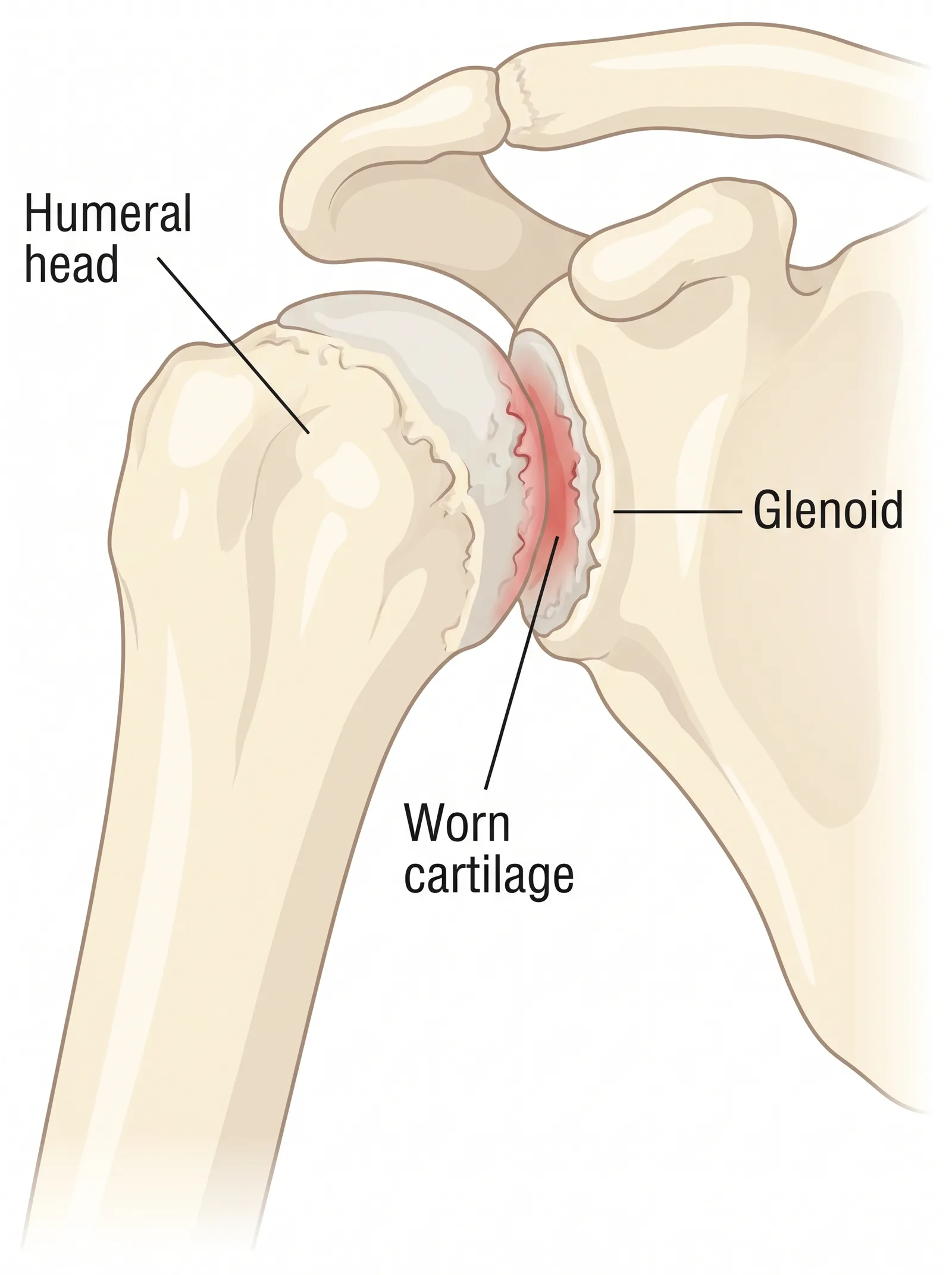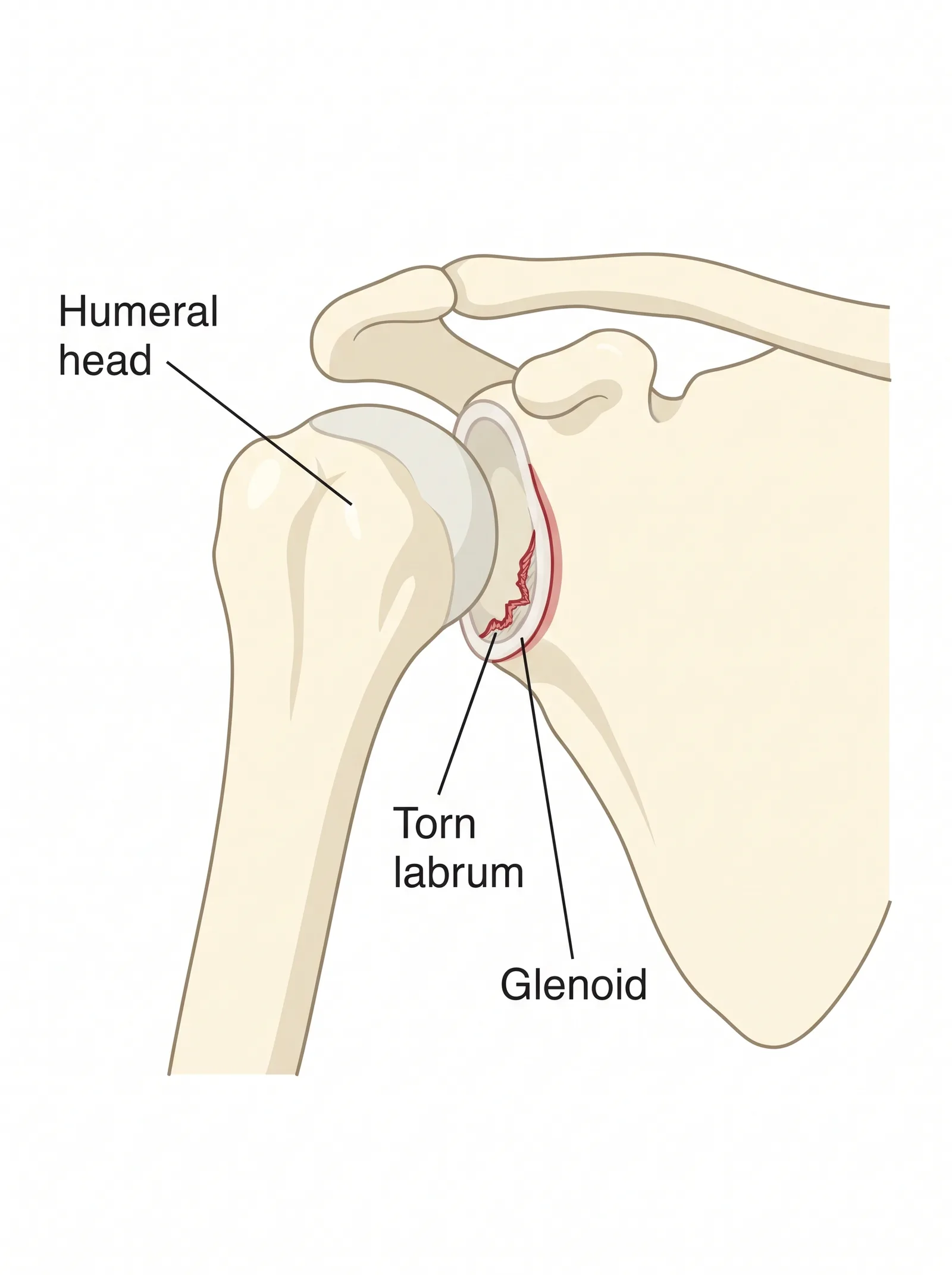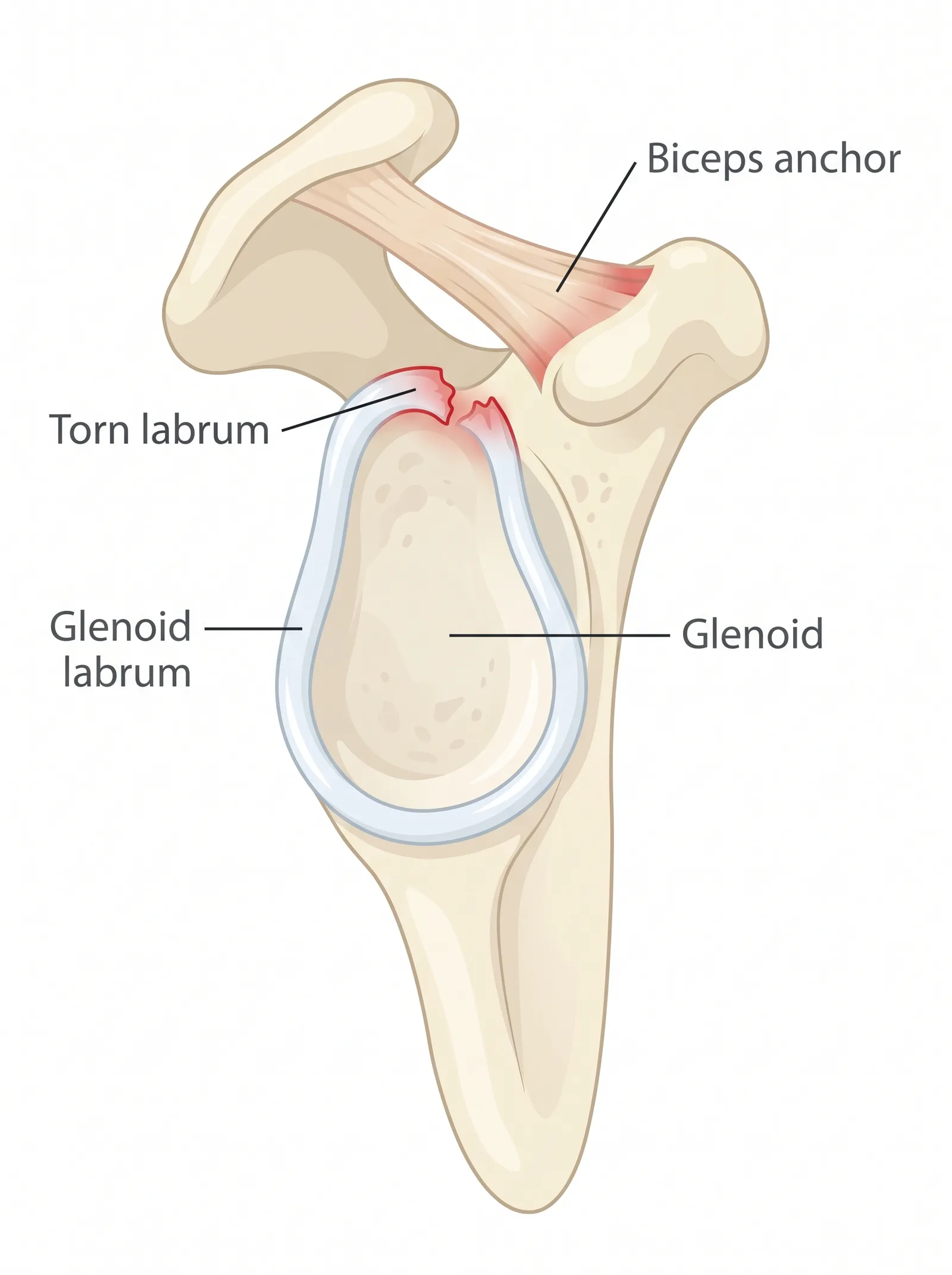
A SLAP tear is an injury to the top of the labrum, the ring of cartilage that deepens the shoulder socket. Dr. Bishai treats SLAP labral tears in Troy, starting with therapy and activity changes and offering arthroscopic repair when the shoulder stays painful despite non-surgical care.
Shariff Bishai diagnoses and treats slap tear and labral tear in Troy, from the first visit through recovery.
Who treats slap tear and labral tear in Troy?
Shariff Bishai is a board certified orthopedic surgeon who treats slap tear and labral tear in Troy, MI. Fellowship trained at Plancher Orthopaedics and Sports Medicine (orthopedic sports medicine fellowship). Dr. Bishai sees patients at the practice in Troy; appointments can be requested through this site.
What is SLAP Tear and Labral Tear?
The labrum is a rim of cartilage that lines the shoulder socket and makes it deeper, which helps hold the ball of the joint in place.
A SLAP tear affects the top part of this rim, where the biceps tendon attaches. SLAP stands for superior labrum anterior to posterior, meaning a tear at the top that runs from front to back.
These tears come from different causes. Some follow a single event, such as a fall onto an outstretched arm or a hard pull on the arm. Others build up over time from repeated overhead motion, which is why they are seen in throwing athletes and people who work overhead. Wear with age also plays a role.
Signs include a deep ache in the shoulder, a catching, locking, or popping feeling with certain motions, pain when reaching overhead or across the body, and a loss of strength or throwing speed in athletes.
How is SLAP Tear and Labral Tear diagnosed, and what does the visit involve?
A SLAP tear is diagnosed with an exam and imaging.
Dr. Bishai will ask how the pain started and test the shoulder with specific movements that stress the top of the labrum. Because these tears can be hard to see, an MRI with contrast, called an MR arthrogram, in which dye is placed in the joint to outline the cartilage, is often the most useful scan. Plain X-rays are taken to check the bones and rule out other causes. In some cases the tear is confirmed and treated during arthroscopy, when the joint is viewed directly with a small camera.
What can I expect over time?
Many SLAP tears improve gradually with the rest, therapy, and activity changes described above, especially strengthening of the muscles that support the shoulder.
The natural course varies: some shoulders settle with non-surgical care, while others stay painful, particularly in athletes whose sport depends on overhead motion. It helps to check back with Dr. Bishai if catching, pain, or loss of strength continues after a few months, since that is when arthroscopic repair may be considered.
What do patients ask most?
Can a SLAP tear heal without surgery?+
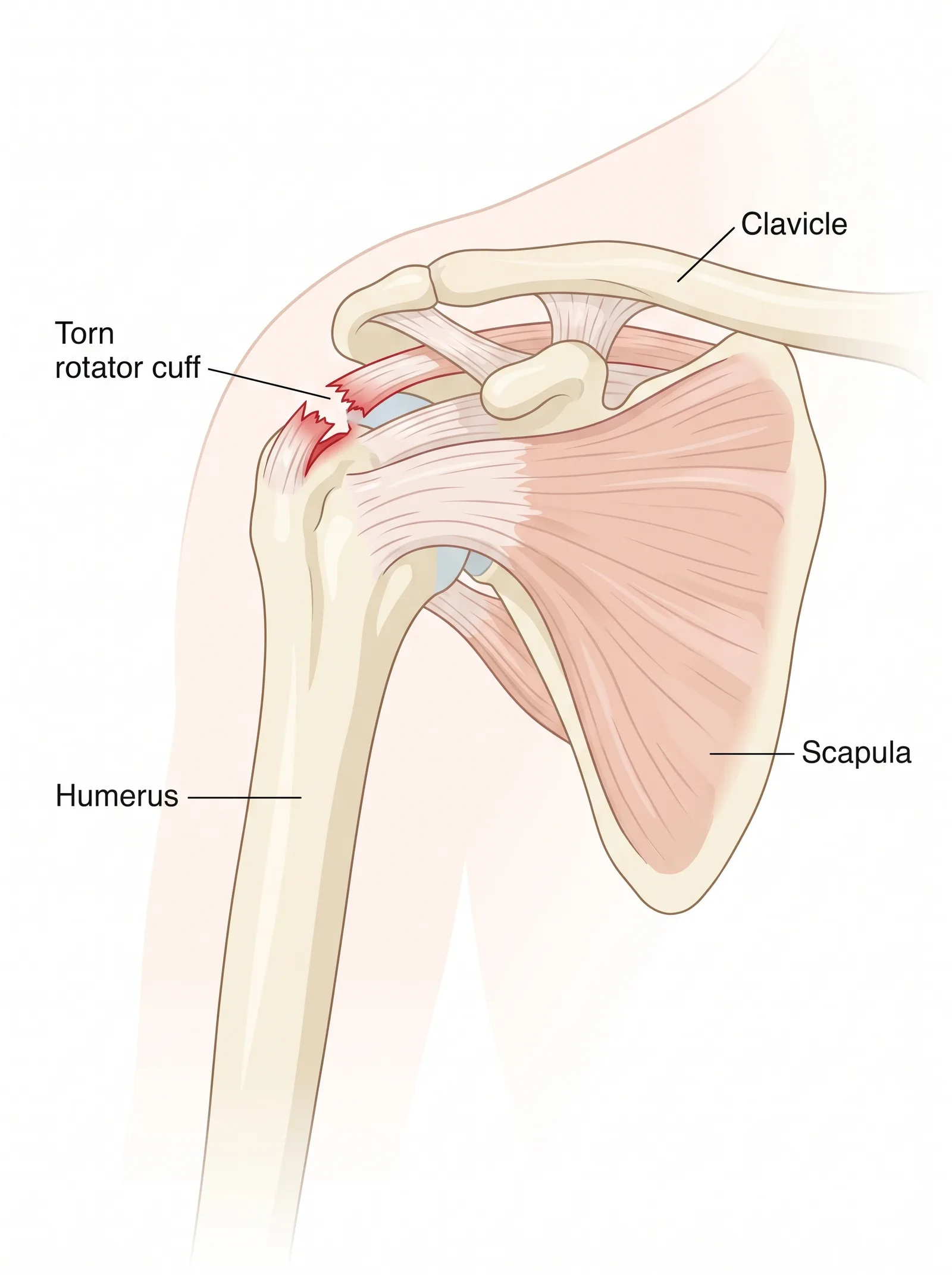
How is a SLAP tear different from a rotator cuff tear?+
What activities cause a SLAP tear?+
How long is recovery after SLAP repair?+
What are the treatment options?
- 01Rest from the motions that trigger pain, especially overhead and throwing activitiesRest from the motions that trigger pain, especially overhead and throwing activities.
- 02Physical therapy to strengthen the rotator cuff and shoulder-blade muscles and restore balPhysical therapy to strengthen the rotator cuff and shoulder-blade muscles and restore balanced motion.
- 03Anti-inflammatory medicine for pain and swellingAnti-inflammatory medicine for pain and swelling.
- 04A corticosteroid injection, a shot that reduces inflammation, in selected cases to ease paA corticosteroid injection, a shot that reduces inflammation, in selected cases to ease pain during rehabilitation.
- 05Arthroscopic surgery, using a small camera through tiny incisions, to repair the labrum orArthroscopic surgery, using a small camera through tiny incisions, to repair the labrum or address the biceps attachment, considered when symptoms continue despite non-surgical care.
How do payments work?
Contact the office to confirm insurance participation.
Fellowship trained at Plancher Orthopaedics and Sports Medicine (orthopedic sports medicine fellowship). Sees patients in Troy.
About Dr. Bishai →