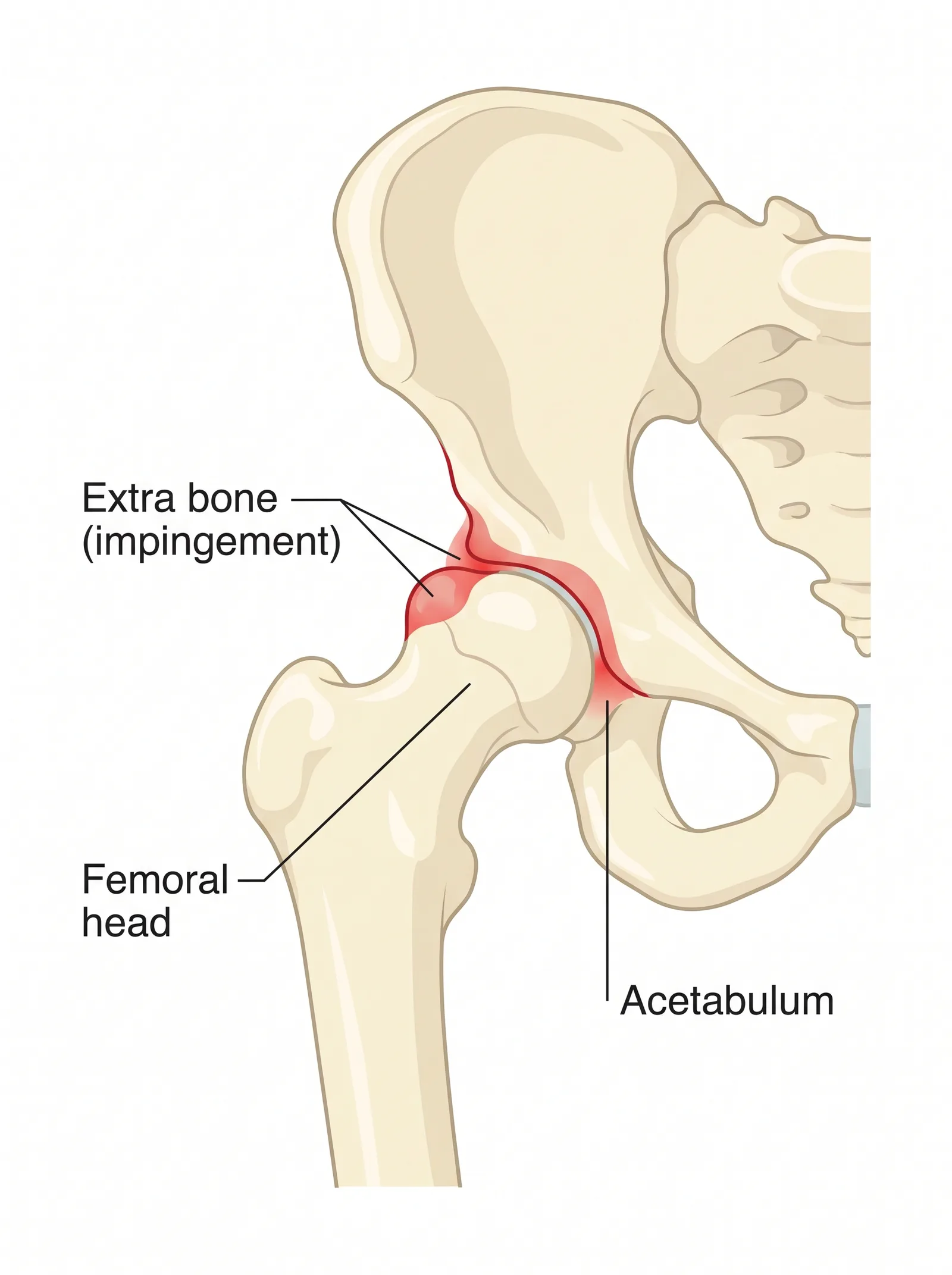
Femoroacetabular impingement, or hip impingement, is extra bone on the ball or socket of the hip that causes the joint to pinch during movement. Dr. Bishai evaluates hip impingement in Troy and treats it with options that start with physical therapy and include arthroscopic surgery when non-surgical care is not enough.
Shariff Bishai diagnoses and treats femoroacetabular impingement (fai) in Troy, from the first visit through recovery.
Who treats femoroacetabular impingement (fai) in Troy?
Shariff Bishai is a board certified orthopedic surgeon who treats femoroacetabular impingement (fai) in Troy, MI. Fellowship trained at Plancher Orthopaedics and Sports Medicine (orthopedic sports medicine fellowship). Dr. Bishai sees patients at the practice in Troy; appointments can be requested through this site.
What is Femoroacetabular Impingement (FAI)?
Femoroacetabular impingement, often shortened to FAI, is a mismatch in the shape of the hip bones.
The hip is a ball and socket joint. When extra bone forms on the ball, the socket rim, or both, the two surfaces pinch together when the hip bends or rotates.
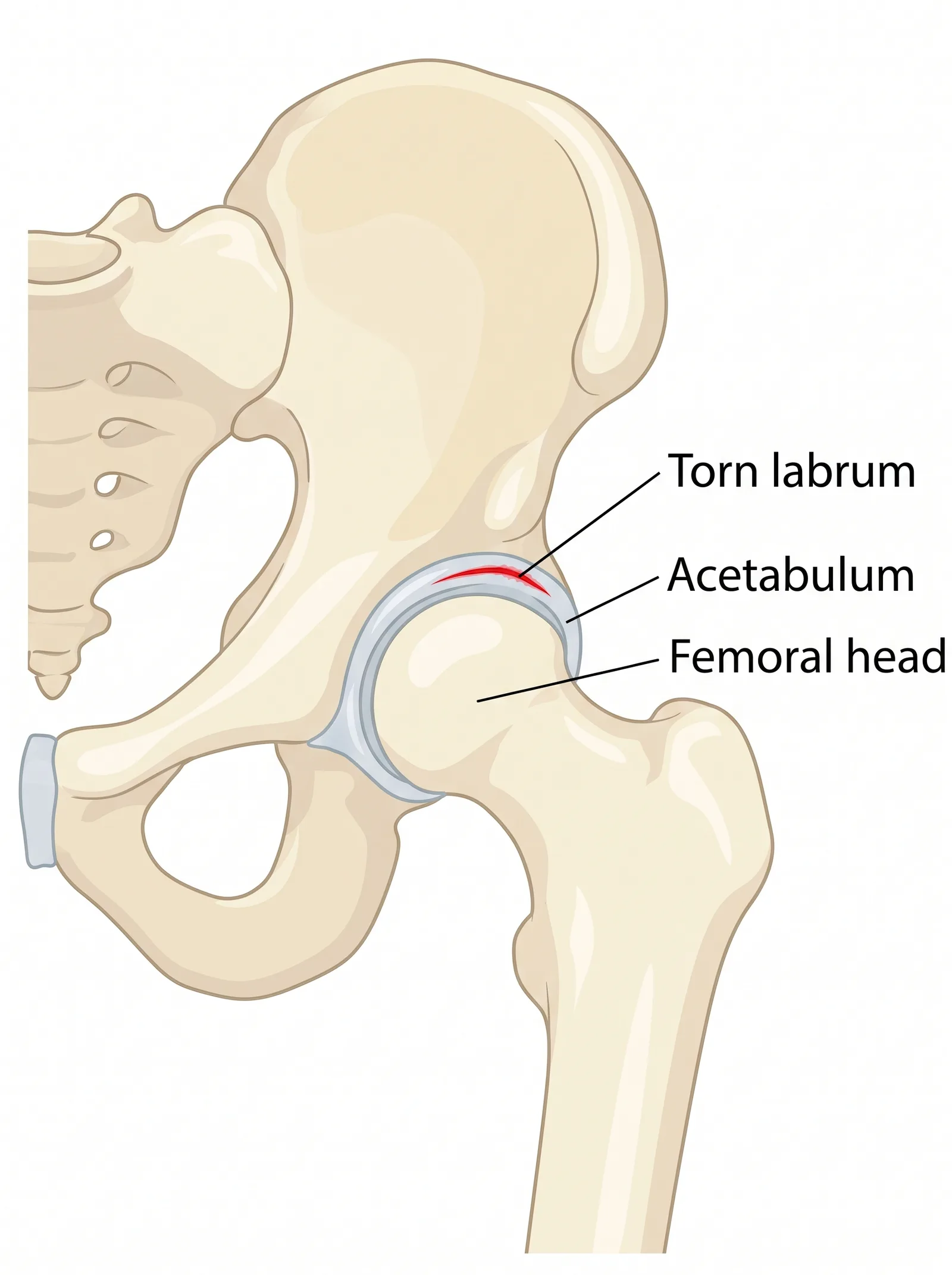
There are three patterns. A cam type is extra bone on the ball. A pincer type is extra bone on the socket rim. A combined type has both. Over time, this pinching can fray the labrum, the cartilage ring around the socket, and wear the cartilage inside the joint.
Symptoms usually include groin pain with deep bending, prolonged sitting, or athletic movement, along with stiffness and a loss of full motion. Many people first notice it during sports that involve pivoting or squatting.
How is Femoroacetabular Impingement (FAI) diagnosed, and what does the visit involve?
Hip impingement is diagnosed with an exam and imaging.
Your physician moves the hip into a bent and rotated position; pain in that position is a common sign. X-rays show the shape of the ball and socket and reveal the extra bone. An MRI, a scan that shows soft tissue, often with contrast dye in the joint, is used to check the labrum and the cartilage. Together these confirm the pattern of impingement.
What is recovery like for Femoroacetabular Impingement (FAI)?
Not everyone with the bone shape of impingement has symptoms, so treatment is guided by how the hip feels and functions, not by the X-ray alone.
Many people improve with therapy and activity changes. When pain continues and imaging shows the bone shape is damaging the joint, arthroscopic treatment may be discussed. The decision depends on your symptoms, your goals, and the imaging. Your physician will review it with you.
What do patients ask most?
What is the difference between cam and pincer impingement?+
Does hip impingement always need surgery?+
Can hip impingement lead to arthritis?+
Why does my hip hurt when I sit for a long time?+
What are the treatment options?
- 01Activity changes to limit deep bending and repeated pivoting that trigger the pinchActivity changes to limit deep bending and repeated pivoting that trigger the pinch.
- 02Physical therapy to strengthen the hip and core and improve movement patternsPhysical therapy to strengthen the hip and core and improve movement patterns.
- 03Anti-inflammatory medication, when appropriate and reviewed with your physicianAnti-inflammatory medication, when appropriate and reviewed with your physician.
- 04A guided injection into the joint to reduce pain and help confirm the sourceA guided injection into the joint to reduce pain and help confirm the source.
- 05Hip arthroscopy, a surgery using a small camera and thin instruments through tiny incisionHip arthroscopy, a surgery using a small camera and thin instruments through tiny incisions, to reshape the bone and address any labral damage when non-surgical care does not relieve symptoms.
How do payments work?
Contact the office to confirm insurance participation.
Fellowship trained at Plancher Orthopaedics and Sports Medicine (orthopedic sports medicine fellowship). Sees patients in Troy.
About Dr. Bishai →