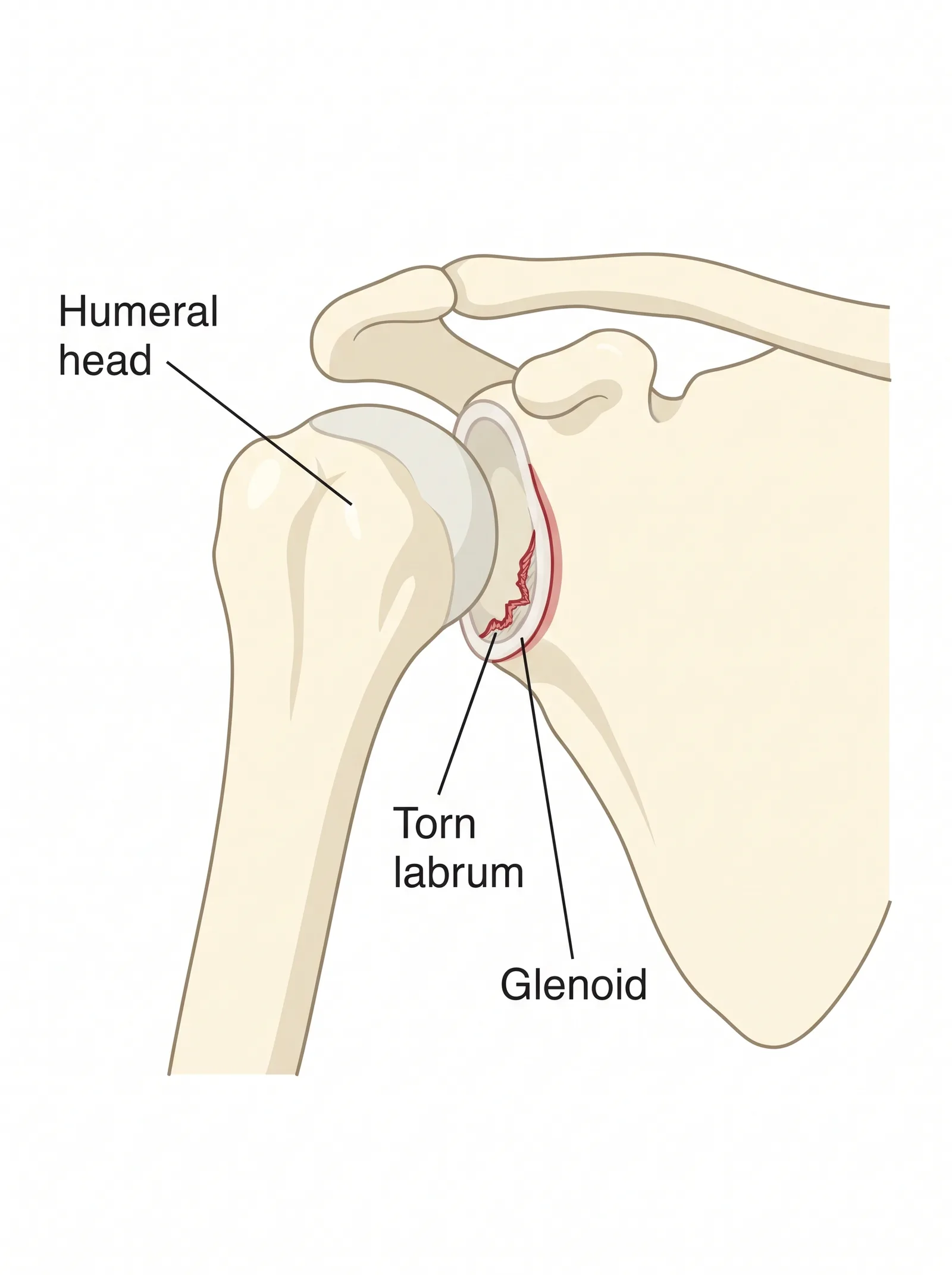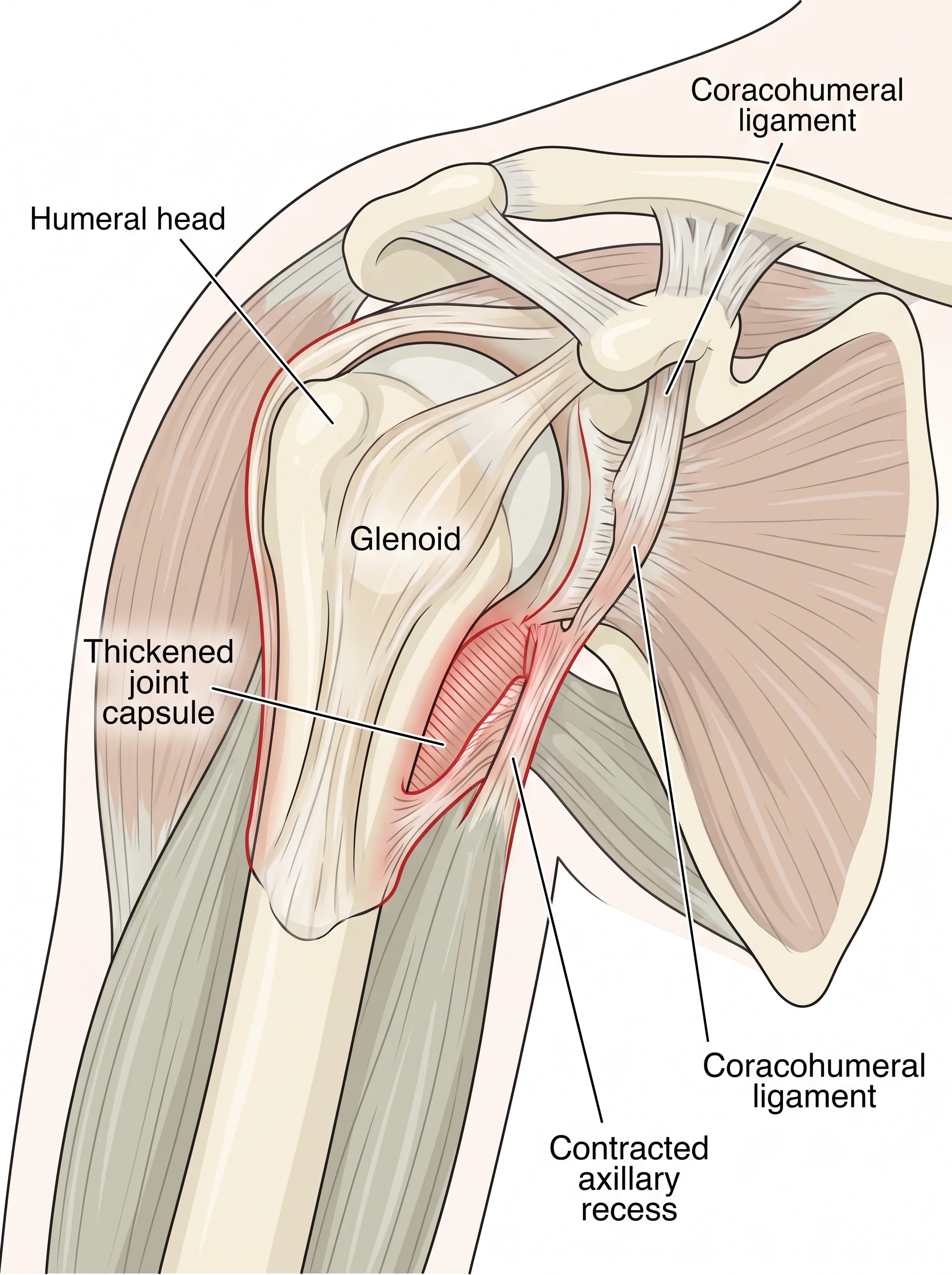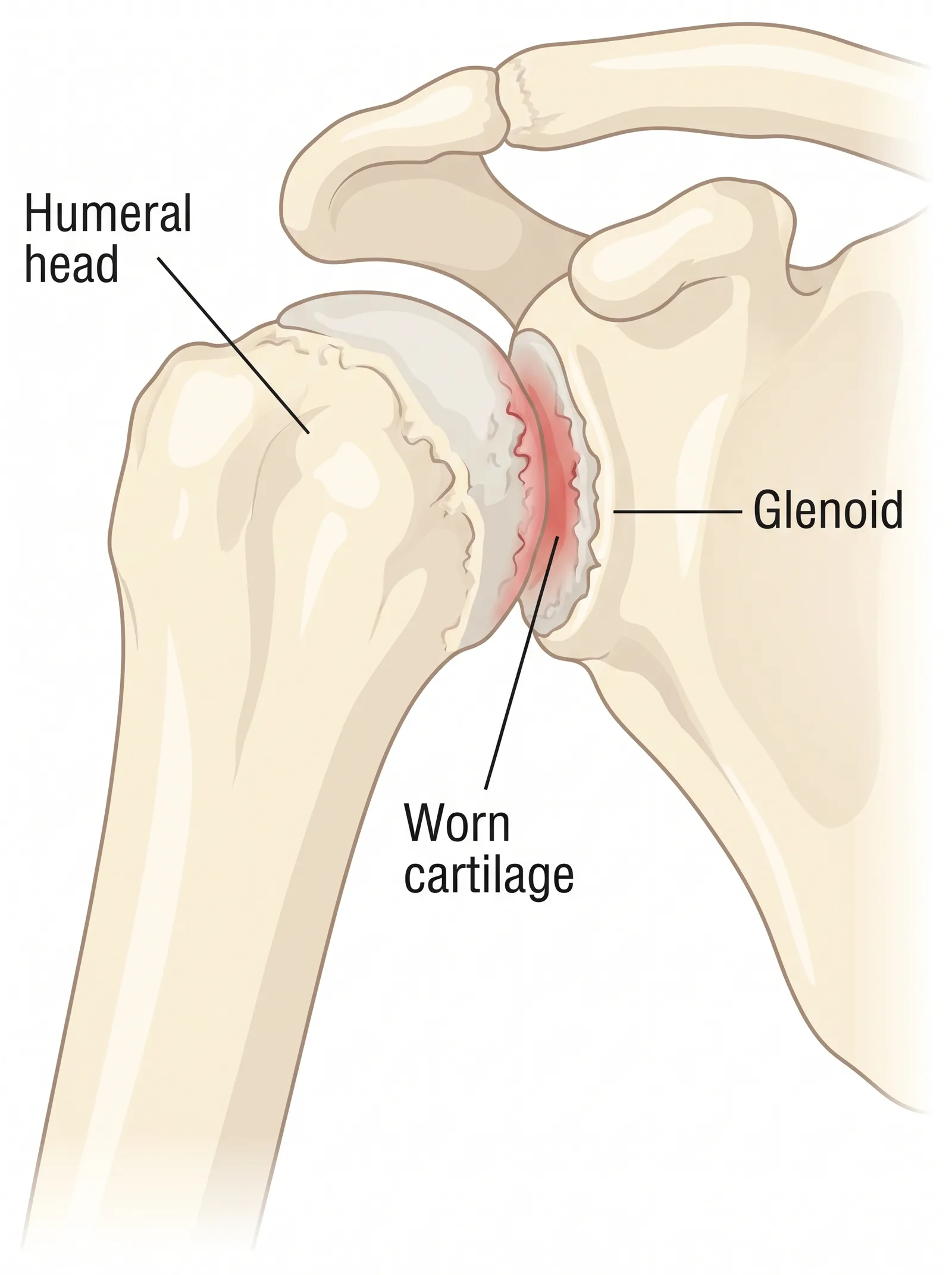
Shoulder osteoarthritis is the gradual wearing of the smooth cartilage that cushions the shoulder joint. Dr. Bishai treats shoulder arthritis in Troy with a plan that begins with activity changes, therapy, and injections, and includes joint replacement when daily pain and stiffness no longer respond to non-surgical care.
Shariff Bishai diagnoses and treats shoulder osteoarthritis in Troy, from the first visit through recovery.
Who treats shoulder osteoarthritis in Troy?
Shariff Bishai is a board certified orthopedic surgeon who treats shoulder osteoarthritis in Troy, MI. Fellowship trained at Plancher Orthopaedics and Sports Medicine (orthopedic sports medicine fellowship). Dr. Bishai sees patients at the practice in Troy; appointments can be requested through this site.
What is Shoulder Osteoarthritis?
Osteoarthritis is the slow breakdown of cartilage, the smooth tissue that caps the ends of bones and lets a joint glide.
In the shoulder, this cartilage sits on the ball of the arm bone and inside the socket. As it thins, bone rubs against bone, which brings pain and stiffness.
The change usually develops over years. It is more common with age, after an old injury, or in people who have done heavy overhead work. Some people also develop shoulder arthritis after a past dislocation or fracture.
Typical signs are a deep ache in the shoulder, stiffness that makes reaching behind the back or overhead harder, and a grinding or catching feeling with motion. Pain often builds gradually and can disturb sleep as it progresses.
How is Shoulder Osteoarthritis diagnosed, and what does the visit involve?
Shoulder arthritis is diagnosed with an exam and X-rays.
Dr. Bishai will check how far the shoulder moves, where it hurts, and whether motion produces grinding. X-rays show the hallmark signs of osteoarthritis: narrowing of the space between bones as cartilage thins, and bone spurs, which are small growths at the edges of the joint. When the picture is unclear or surgery is being considered, a CT scan or MRI adds detail about the bone and soft tissue. The findings guide whether therapy, injections, or replacement fits your stage.
What can I expect over time?
Shoulder osteoarthritis usually changes slowly over years, and the pace differs from person to person.
Many people manage the deep ache and stiffness well for a long time with the activity changes, therapy, and injections described above, even though these steps do not rebuild lost cartilage. It helps to stay in touch with Dr. Bishai for regular follow-up, and to revisit sooner if pain, stiffness, or trouble sleeping begins to limit your daily life despite non-surgical care.
What do patients ask most?
What is the first treatment for shoulder arthritis?+
How do I know if my shoulder pain is arthritis?+
When should I consider shoulder replacement?+
Does shoulder arthritis get worse over time?+
What are the treatment options?
- 01Activity changes to reduce motions that trigger pain, paired with rest during flare-upsActivity changes to reduce motions that trigger pain, paired with rest during flare-ups.
- 02Physical therapy to keep the joint moving and strengthen supporting musclesPhysical therapy to keep the joint moving and strengthen supporting muscles.
- 03Anti-inflammatory medicine for pain and swellingAnti-inflammatory medicine for pain and swelling.
- 04A corticosteroid injection, a shot that reduces inflammation inside the joint, for periodsA corticosteroid injection, a shot that reduces inflammation inside the joint, for periods of higher pain.
- 05Total shoulder replacement, in which worn surfaces are replaced with smooth implants, consTotal shoulder replacement, in which worn surfaces are replaced with smooth implants, considered when pain and stiffness limit daily life despite non-surgical care.
How do payments work?
Contact the office to confirm insurance participation.
Fellowship trained at Plancher Orthopaedics and Sports Medicine (orthopedic sports medicine fellowship). Sees patients in Troy.
About Dr. Bishai →