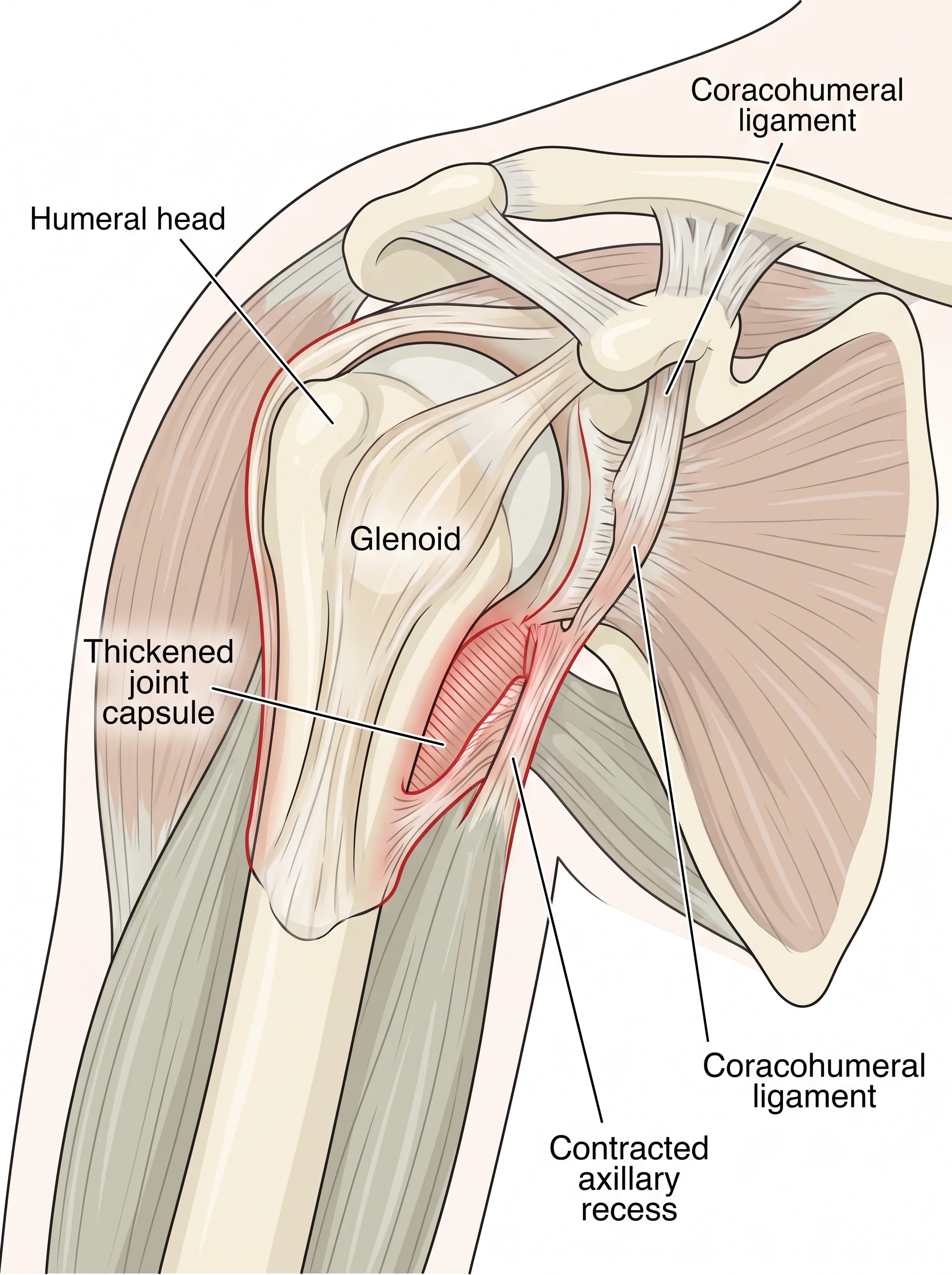
Frozen shoulder is stiffness and pain from the thickening and tightening of the tissue around the shoulder joint. Dr. Bishai treats frozen shoulder in Troy with therapy, injections, and time, since the condition often eases on its own, and offers further options when stiffness does not improve.
Shariff Bishai diagnoses and treats frozen shoulder in Troy, from the first visit through recovery.
Who treats frozen shoulder in Troy?
Shariff Bishai is a board certified orthopedic surgeon who treats frozen shoulder in Troy, MI. Fellowship trained at Plancher Orthopaedics and Sports Medicine (orthopedic sports medicine fellowship). Dr. Bishai sees patients at the practice in Troy; appointments can be requested through this site.
What is Frozen Shoulder?
Frozen shoulder, known medically as adhesive capsulitis, happens when the capsule, the sleeve of connective tissue around the shoulder joint, thickens and tightens.
This limits how far the shoulder can move, both when you move it yourself and when someone else moves it for you.
It often develops in stages. First comes a painful phase as the shoulder gradually stiffens, then a stiff phase where pain may ease but motion stays limited, and finally a thawing phase where motion slowly returns. The full course can last a year or longer.
Frozen shoulder is more common between ages 40 and 60, in women, and in people with diabetes or thyroid conditions. It can also follow a period when the shoulder was kept still, such as after an injury or surgery.
How is Frozen Shoulder diagnosed, and what does the visit involve?
Frozen shoulder is diagnosed mainly from the exam.
Dr. Bishai will move your arm to measure how far the shoulder goes on its own and when guided, and the hallmark is loss of motion in both, especially when rotating the arm outward. X-rays are usually normal in frozen shoulder but are taken to rule out arthritis or other causes of a stiff, painful shoulder. An MRI is not always needed, but it can be used when the diagnosis is unclear or another problem is suspected. The pattern of lost motion, more than any single scan, confirms the diagnosis.
What can I expect over time?
Frozen shoulder tends to follow a long but improving course, often moving from a painful phase, to a stiff phase, to a slow return of motion.
Most people regain comfort and movement with the gentle therapy, medicine, and injections described above, and pushing too hard through pain can slow that progress. It helps to stay in touch with Dr. Bishai during recovery, and to revisit if stiffness does not improve after a prolonged period of non-surgical care.
What do patients ask most?
Does frozen shoulder go away on its own?+
What is the fastest way to loosen a frozen shoulder?+
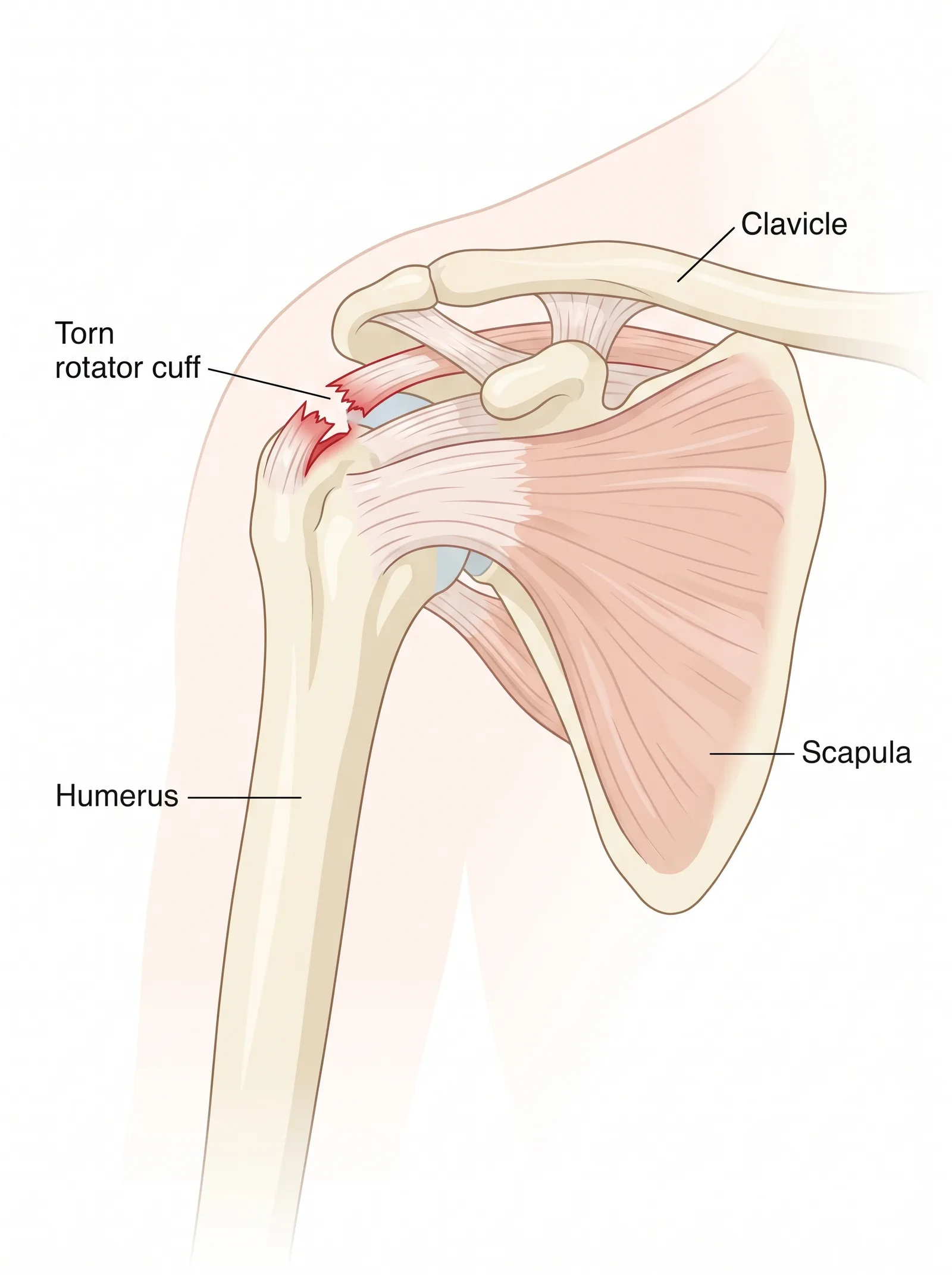
Is frozen shoulder the same as a rotator cuff tear?+
Can frozen shoulder come back?+
What are the treatment options?
- 01Gentle stretching and physical therapy to restore range of motion, done within a comfortabGentle stretching and physical therapy to restore range of motion, done within a comfortable range.
- 02Anti-inflammatory medicine to manage pain during the painful phaseAnti-inflammatory medicine to manage pain during the painful phase.
- 03A corticosteroid injection, a shot that reduces inflammation in the joint, which can easeA corticosteroid injection, a shot that reduces inflammation in the joint, which can ease pain and speed progress in earlier stages.
- 04Hydrodilatation, an injection of fluid to gently stretch the capsule, in selected casesHydrodilatation, an injection of fluid to gently stretch the capsule, in selected cases.
- 05A procedure to release or stretch the tight capsule, considered only when stiffness does nA procedure to release or stretch the tight capsule, considered only when stiffness does not improve after prolonged non-surgical care.
How do payments work?
Contact the office to confirm insurance participation.
Fellowship trained at Plancher Orthopaedics and Sports Medicine (orthopedic sports medicine fellowship). Sees patients in Troy.
About Dr. Bishai →