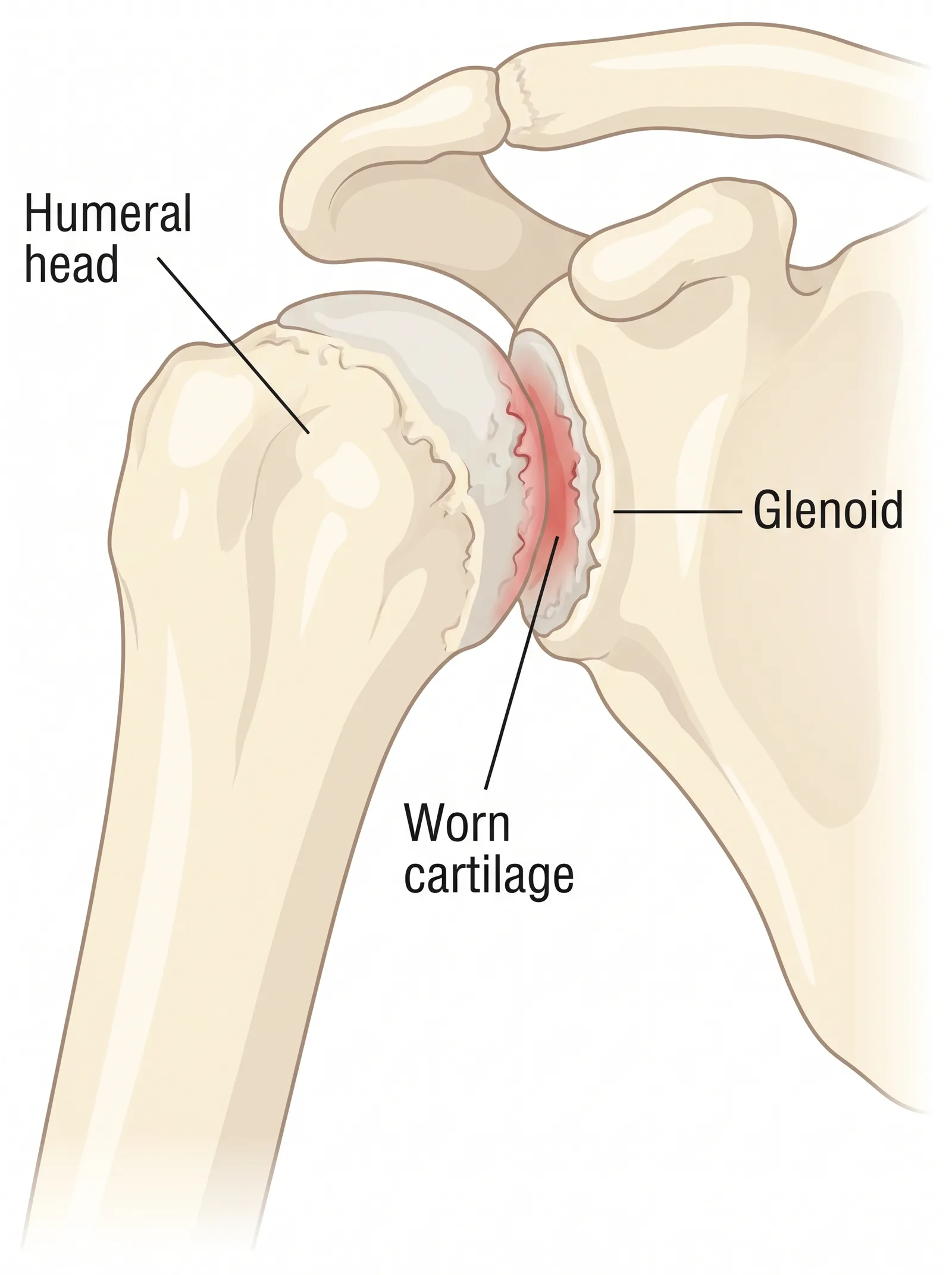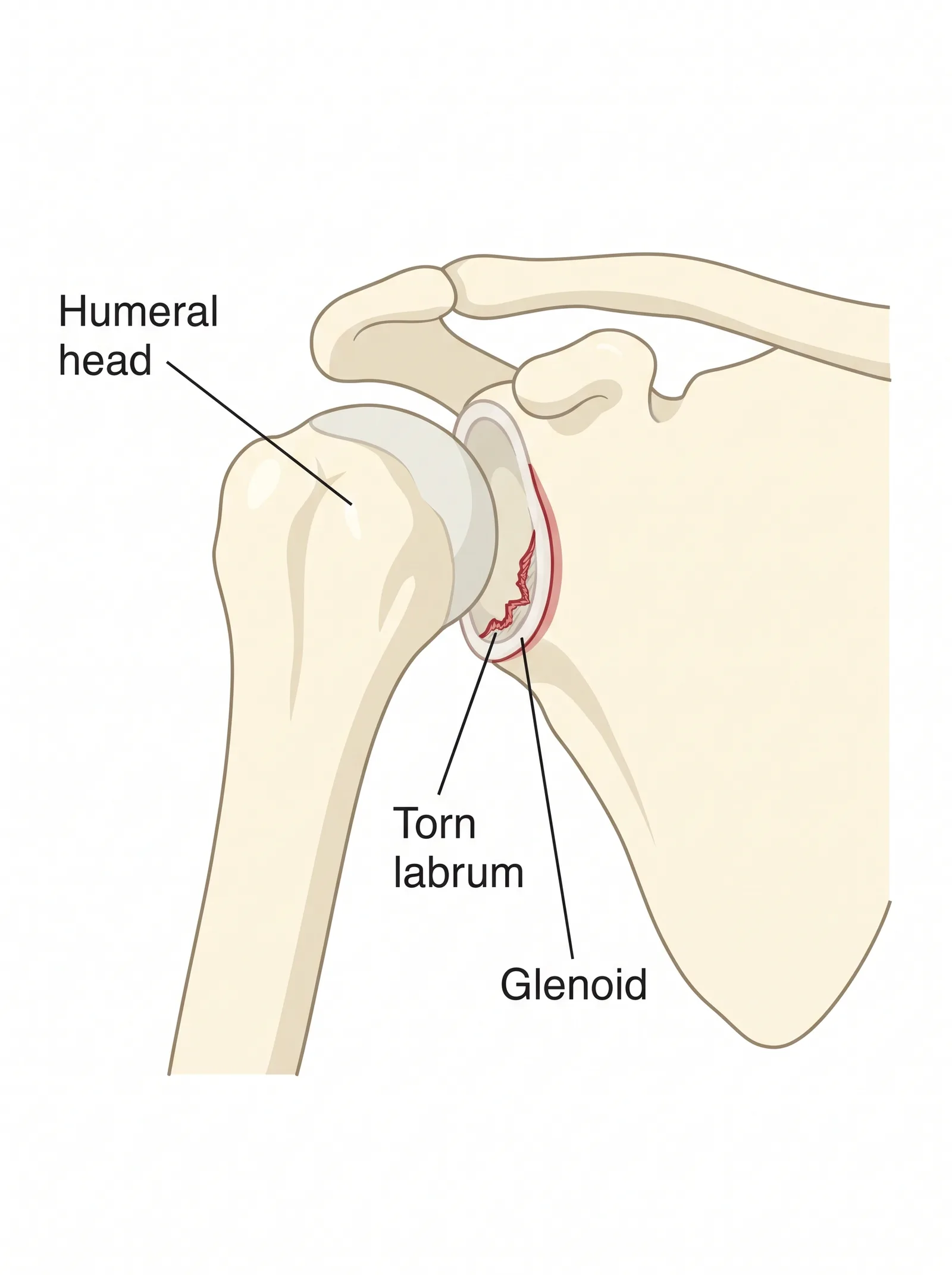
Shoulder instability means the ball of the shoulder slips partly or fully out of its socket. A full slip is a dislocation; a partial one is a subluxation. It often follows an injury and can keep happening. Care begins with therapy and activity changes. Surgery is one option when the shoulder keeps giving out.
Shariff Bishai diagnoses and treats shoulder instability / dislocation in Troy, from the first visit through recovery.
Who treats shoulder instability / dislocation: a complete guide in Troy?
Shariff Bishai is a board certified orthopedic surgeon who treats shoulder instability / dislocation: a complete guide in Troy, MI. Fellowship trained at Plancher Orthopaedics and Sports Medicine (orthopedic sports medicine fellowship). Dr. Bishai sees patients at the practice in Troy; appointments can be requested through this site.
What is shoulder instability?
The shoulder is a ball-and-socket joint built for a wide range of motion.
The trade-off for that motion is that the socket is shallow, so the shoulder relies on a rim of cartilage called the labrum, along with ligaments and muscles, to keep the ball centered. Shoulder instability means these structures are no longer holding the ball firmly in place, so it slips.
A full slip out of the socket is a dislocation. A partial slip that goes back on its own is a subluxation. The first dislocation is often caused by a strong force, such as a fall or a sports collision, that tears the labrum or stretches the ligaments. Once those structures are damaged, the shoulder can dislocate more easily the next time, which is how instability becomes a repeating pattern. Some people also have naturally loose ligaments that make the shoulder slip without a major injury.
Understanding whether your instability came from an injury, from repeated small slips, or from loose tissue matters, because it shapes treatment. That sorting-out is done with a specialist.
What are the symptoms of Shoulder Instability / Dislocation, and when should you see a specialist?
People with shoulder instability describe a shoulder that feels loose, slips, or gives out.
Common signs, in patient words.
- A feeling that the shoulder is about to slip out, especially with the arm raised and rotated back. - Repeated episodes where the shoulder partly or fully pops out and then goes back. - Pain and a sense of looseness after a dislocation. - Numbness or tingling down the arm right after a slip. - Avoiding certain positions, like reaching overhead or back, out of fear the shoulder will go out.
See a shoulder specialist after any full dislocation, even if it went back into place, because the first event often causes damage that raises the risk of it happening again. Also see a specialist if the shoulder repeatedly feels like it is slipping or giving out. Seek urgent care right away if a dislocated shoulder will not go back in, if the arm is numb or cold, or if there is severe pain after the injury. This section explains the condition; a specialist confirms what is happening in your shoulder.
How is shoulder instability diagnosed?
Diagnosis starts with the story of what happened and a physical exam.
Your specialist asks how the shoulder first slipped, how often it happens, and which positions feel unsafe. During the exam, the specialist gently tests how the shoulder responds in the positions where it tends to slip, and checks the strength and feeling in the arm.
Imaging confirms the detail. X-rays show the bones and can reveal damage to the ball or socket from a dislocation. An MRI (magnetic resonance imaging, a scan that shows soft tissue in detail), sometimes done with a dye placed in the joint to sharpen the picture, shows the labrum and ligaments so the specialist can see what has torn or stretched. The exam and images together guide the plan.
What happens during instability repair?
When surgery is chosen, many instability repairs are done with arthroscopy (a technique using a small camera and thin instruments through small cuts).
The general sequence.
- You receive anesthesia so you feel no pain during the procedure, and your team reviews the plan with you. - The surgeon makes small cuts and inserts the camera and instruments. - The joint is inspected to confirm the torn labrum and stretched ligaments and to check for bone damage. - The torn labrum is reattached to the rim of the socket, and loose ligaments are tightened. - Small anchors placed in the bone hold the repaired tissue in place while it heals. - The cuts are closed and the arm is placed in a sling.
When there is significant bone loss from repeated dislocations, a different procedure that restores bone may be recommended instead. Your surgeon chooses the approach based on your imaging and exam.
What is the recovery timeline for Shoulder Instability / Dislocation?
Recovery from instability repair is staged and measured by ability, because the repaired tissue must heal before the shoulder is loaded in the positions that used to make it slip.
The general order of milestones.
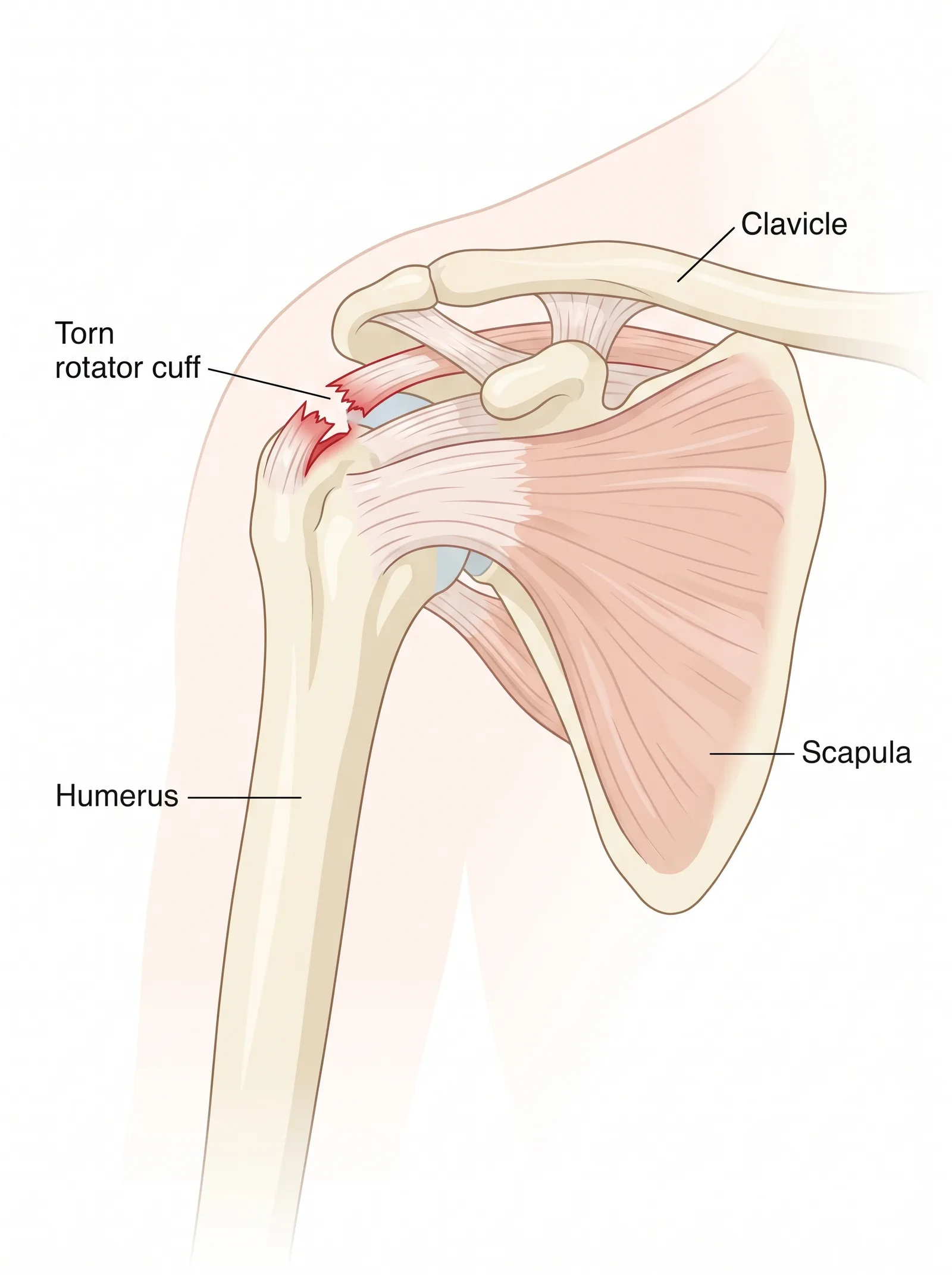
- Protect. The arm rests in a sling early on so the repair can begin to heal. - Regain motion. You gradually work back to comfortable motion under guidance, avoiding risky positions at first. - Rebuild strength and control. Strengthening the cuff and shoulder-blade muscles restores the shoulder's ability to hold the ball centered. - Return to activity and sport. Return happens in stages, with contact and overhead sports usually last, once strength and control meet the demands of the activity.
For a sense of length, many people wear a sling for the first weeks and return to sports over several months after instability surgery, according to general guidance from the American Academy of Orthopaedic Surgeons (AAOS). These are ranges, not promises. Your timeline depends on the repair, your sport or job, and rehabilitation. Your team will map it with you.
How should you prepare for surgery?
Planning ahead eases the first weeks, since one arm will be in a sling.
- Home setup. Keep daily items within reach at waist height. Front-opening shirts are easier than pullovers. A recliner or wedge pillow can help with rest. - Transportation. Arrange a ride home after anesthesia, and plan for rides while you are in the sling. - Time off. Ask your surgeon what to expect for your job and, if you play a sport, for your return. - Help on hand. Have someone available for the first few days for meals, dressing, and errands.
Which warning signs should you call about?
Most recoveries are uneventful, but some signs need a call.
Contact your specialist's office or surgical team if you notice the following.
- Fever, spreading redness, or drainage from an incision. - Pain that is worsening rather than easing, or is not controlled by your plan. - New numbness, tingling, or a hand that looks pale or feels cold. - The shoulder feeling like it slips again during recovery. - Calf pain or swelling, chest pain, or shortness of breath. These need urgent attention and may mean calling emergency services rather than the office.
When in doubt, call the office.
What results can you expect from Shoulder Instability / Dislocation?
Surgery to repair shoulder instability is generally effective at reducing the chance of future dislocations and restoring a stable, usable shoulder, especially in people who have had repeated slips.
According to general guidance from the American Academy of Orthopaedic Surgeons (AAOS), most people regain a stable shoulder after instability repair, and the chance of another dislocation is much lower than without surgery. These are general findings and ranges, not promises. Your surgeon can explain your likely result based on your damage and activity.
What do patients ask most?
My shoulder went back in on its own. Do I still need to be seen?+
Will my shoulder keep dislocating?+
Can I go back to contact sports?+
How long will I be in a sling?+
What are the treatment options?
- 01Rest and protectionAfter a dislocation, a short period in a sling lets the irritated tissues calm down.
- 02Physical therapyThis is the core of non-surgical care. Strengthening the rotator cuff and shoulder-blade muscles helps hold the ball centered and can reduce slipping. Therapy also retrains control in the positions that feel unsafe.
- 03Activity changesAdjusting or briefly avoiding the positions and activities that provoke slips gives the shoulder a chance to stabilize.
- 04Anti-inflammatory medicineOver-the-counter medicine can help with pain after an episode. Use as directed and check with your specialist about other conditions.
How do payments work?
Contact the office to confirm insurance participation.
Fellowship trained at Plancher Orthopaedics and Sports Medicine (orthopedic sports medicine fellowship). Sees patients in Troy.
About Dr. Bishai →