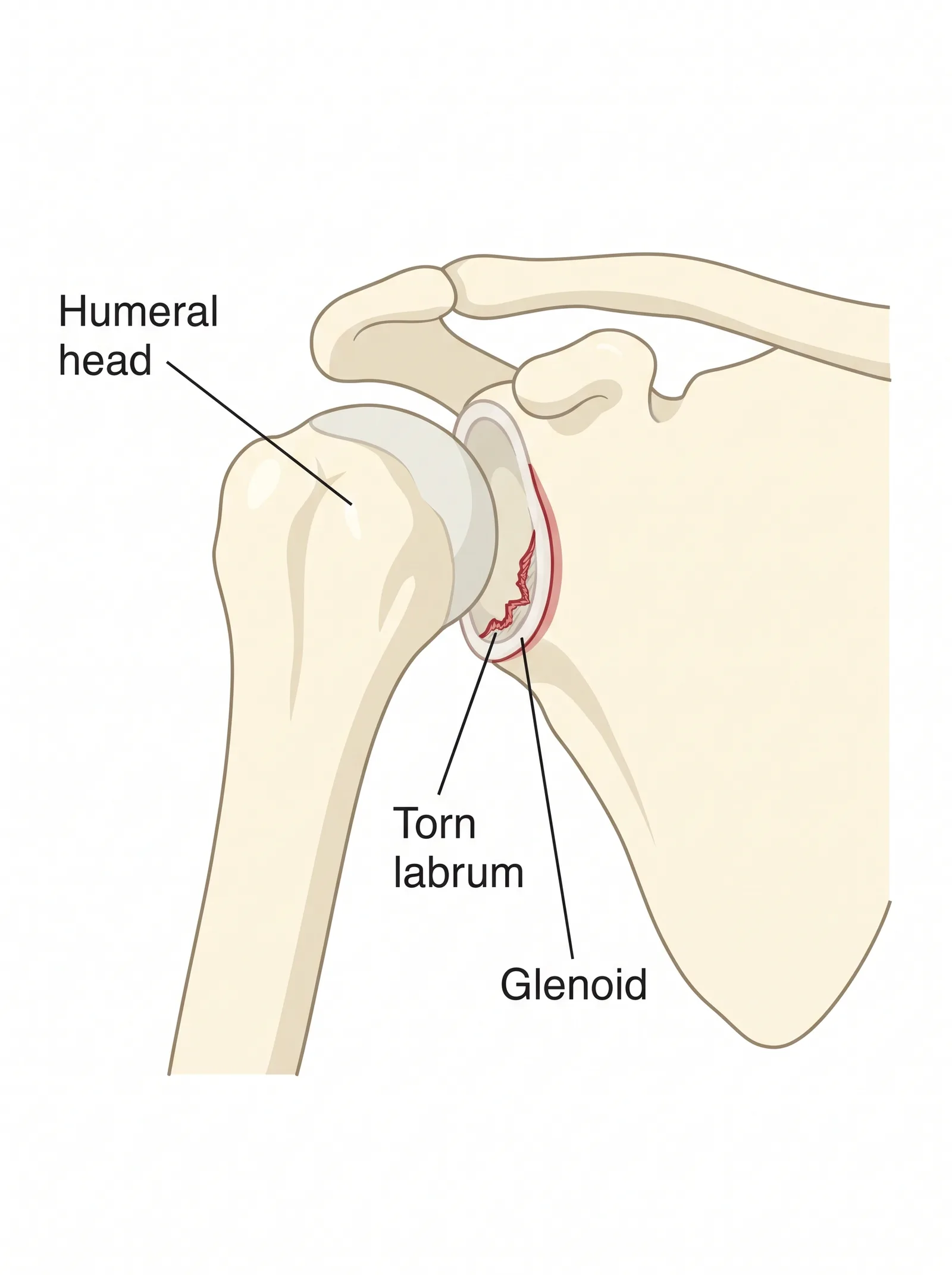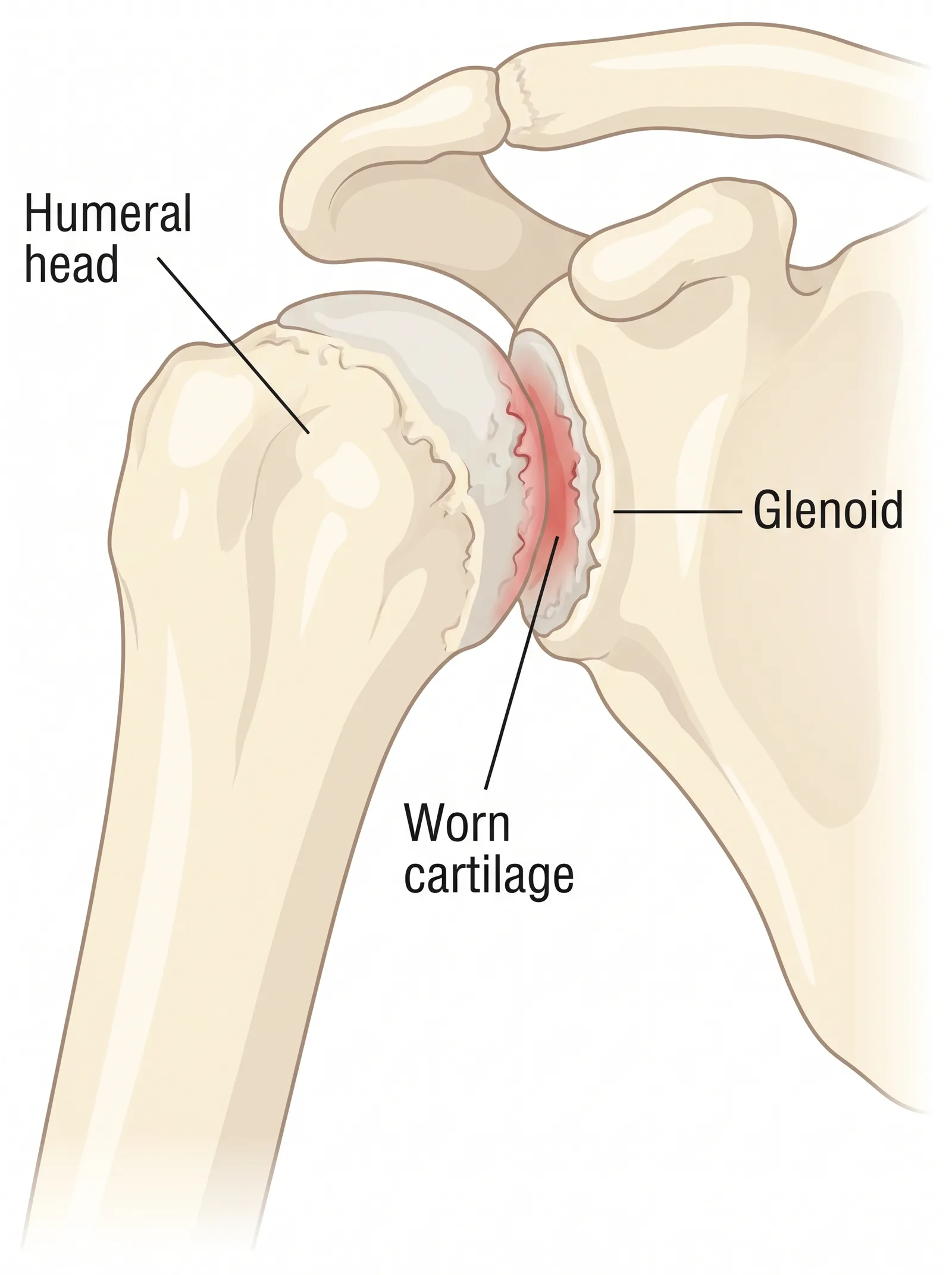
Shoulder osteoarthritis is the slow wearing away of the smooth cartilage that lets the shoulder joint glide. It shows up as pain, stiffness, and grinding that build over years. Care begins with therapy, activity changes, and other non-surgical steps. Joint replacement is one option when those stop helping.
Shariff Bishai diagnoses and treats shoulder osteoarthritis in Troy, from the first visit through recovery.
Who treats shoulder osteoarthritis: a complete guide in Troy?
Shariff Bishai is a board certified orthopedic surgeon who treats shoulder osteoarthritis: a complete guide in Troy, MI. Fellowship trained at Plancher Orthopaedics and Sports Medicine (orthopedic sports medicine fellowship). Dr. Bishai sees patients at the practice in Troy; appointments can be requested through this site.
What is shoulder osteoarthritis?
Osteoarthritis is the gradual loss of cartilage, the smooth, slippery tissue that caps the ends of bones so they glide without friction.
In the shoulder, the main ball-and-socket joint (where the top of the arm bone meets the shoulder blade) slowly loses that cushion. As cartilage thins, bone rubs against bone, the joint gets stiff, and small bone spurs can form.
Shoulder osteoarthritis usually develops over years and is more common with age. It can also follow an old injury, such as a fracture or a dislocation, or come with other joint conditions. Because it builds slowly, many people adjust to it without realizing how much motion they have lost until it limits daily tasks.
This is a mechanical wear problem, not something you did wrong. Understanding what is happening in the joint helps make sense of the treatment ladder, which starts gently and moves up only as needed.
What are the symptoms of Shoulder Osteoarthritis, and when should you see a specialist?
People with shoulder osteoarthritis usually describe a slow build of pain and stiffness.
Common signs, in plain terms.
- A deep ache in the shoulder that is worse with use and eases with rest. - Stiffness that makes it hard to reach overhead, behind your back, or across your body. - A grinding, clicking, or catching feeling when you move the shoulder. - Pain that disturbs sleep, especially when lying on that side. - A shoulder that feels like it is slowly closing down over months or years.
It is reasonable to see a shoulder specialist when pain or stiffness limits work, sleep, or daily tasks, or when the shoulder is losing motion over time. There is no need to wait until it is severe. Earlier evaluation gives you more options along the treatment ladder. This section explains the condition; a specialist visit is how the cause of your specific symptoms gets confirmed.
How is shoulder osteoarthritis diagnosed?
Diagnosis begins with your history and a physical exam.
Your specialist asks how long the pain has been building, what motions are hardest, and how it affects sleep and daily life. During the exam, the specialist checks how far your shoulder moves in each direction, listens and feels for grinding, and tests strength.
X-rays are the main imaging test for osteoarthritis. They show the space between the bones, and a narrowed space, along with bone spurs, is a classic sign of cartilage loss. Sometimes an MRI (magnetic resonance imaging, a scan that shows soft tissue in detail) is added to check the rotator cuff and other soft tissues, because the health of the surrounding tendons affects which treatments make sense. Your specialist puts the exam and images together to understand your joint.
What is the natural course of Shoulder Osteoarthritis?
Osteoarthritis is generally a slow, gradual process rather than a sudden event.
Over months and years, cartilage thins, the joint space narrows, and motion decreases. Many people move through long stretches where symptoms are stable, then have flares brought on by heavy use or by changes in the joint.
The pace is different for everyone. Some shoulders stay comfortable for years with non-surgical care. Others lose motion and comfort more quickly. Following the joint over time with your specialist lets you match treatment to where the joint actually is, rather than to a fixed schedule. The aim at every stage is a comfortable, usable shoulder for your daily life.
What is the recovery timeline after shoulder replacement?
If you and your surgeon choose shoulder replacement, recovery is staged and measured by what you can do, not only by dates.
The general order of milestones.
- Protect and settle. Your arm rests in a sling early on while the tissues that were opened begin to heal. Gentle movement often starts under guidance. - Regain motion. You gradually work back to comfortable motion, first with help, then on your own. - Rebuild strength. Once motion is established, strengthening begins in steps. - Return to activity. You resume fuller daily activity when comfort, motion, and control meet your needs, judged with your therapist and surgeon.
For a sense of length, many people use a sling for the first weeks and continue improving in strength and motion for several months up to about a year after shoulder replacement, according to general guidance from the American Academy of Orthopaedic Surgeons (AAOS). These are ranges, not promises. Your timeline depends on the type of replacement, your health, and rehabilitation. Your team will map it with you.
How should you prepare for surgery?
If shoulder replacement is planned, a little setup at home eases the first weeks, since one arm will be in a sling.
- Home setup. Keep daily items within reach at waist height. Front-opening shirts are easier than pullovers. A recliner or wedge pillow can make rest more comfortable than lying flat. - Transportation. Arrange a ride home after anesthesia, and plan for rides while you are in the sling and using pain medicine. - Time off. Ask your surgeon what to expect for your job, since desk and physical work return on different schedules. - Help on hand. Have someone available for the first several days for meals, dressing, and errands. - Health check. Managing other health conditions before surgery supports a smoother recovery.
Which warning signs should you call about?
Most recoveries go smoothly, but some signs need a call.
Contact your specialist's office or surgical team if you notice the following.
- Fever, spreading redness, or drainage from an incision. - Pain that is worsening rather than easing, or is not controlled by your plan. - New numbness, tingling, or a hand that looks pale or feels cold. - Calf pain or swelling, chest pain, or shortness of breath. These need urgent attention and may mean calling emergency services rather than the office.
When in doubt, call the office.
What results can you expect from Shoulder Osteoarthritis?
Shoulder replacement is generally reliable for relieving arthritis pain and restoring function for people whose symptoms no longer respond to non-surgical care.
According to general guidance from the American Academy of Orthopaedic Surgeons (AAOS), most people who have shoulder replacement experience meaningful pain relief and improved motion over time. These are general findings and ranges, not promises for any one person. Your surgeon can explain what to expect based on your joint and the type of replacement.
What do patients ask most?
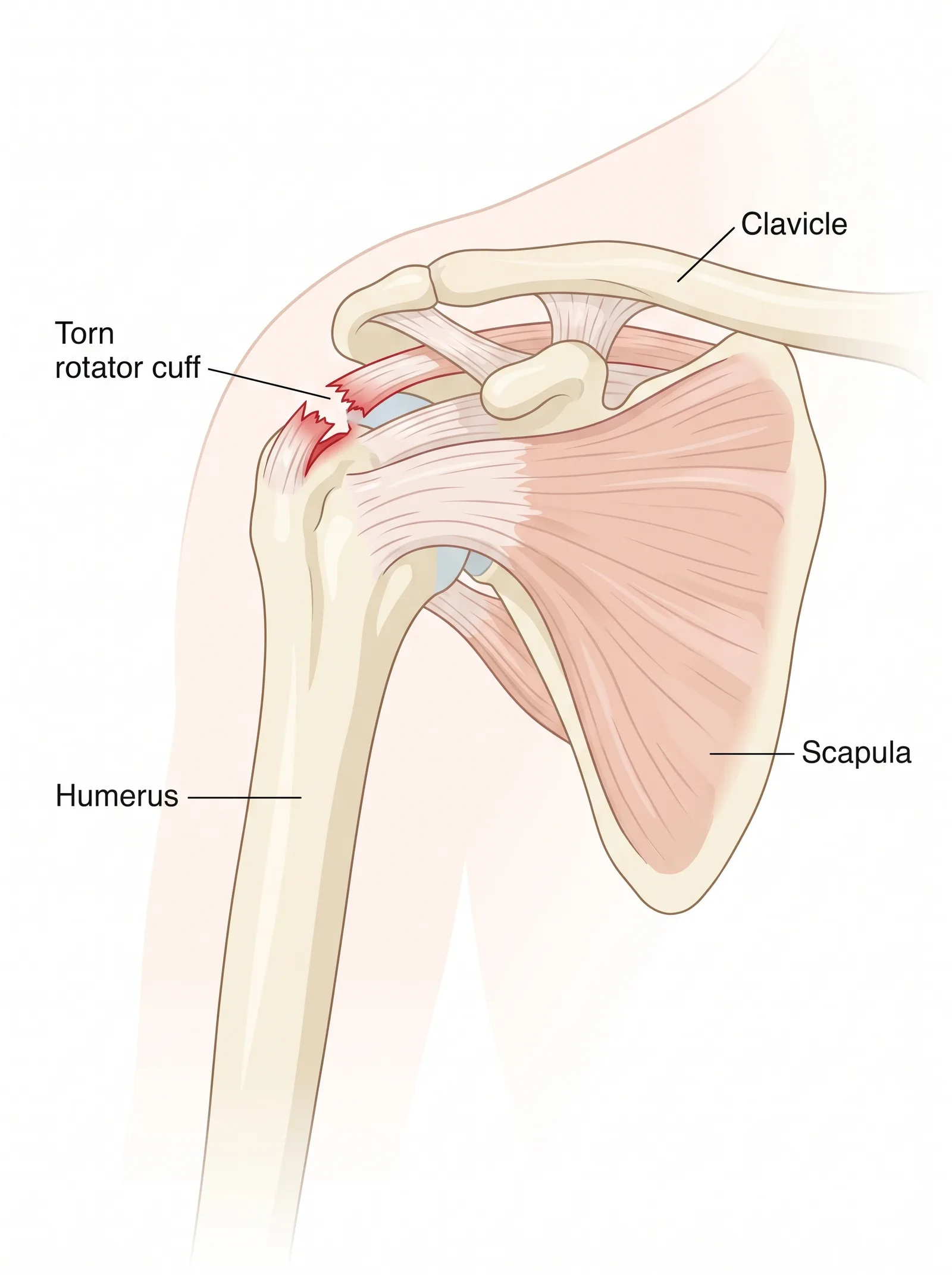
Is shoulder osteoarthritis the same as a rotator cuff tear?+
Will I definitely need a shoulder replacement?+
Does exercise make arthritis worse?+
How long does a shoulder replacement recovery take?+
What are the treatment options?
- 01Activity changesAdjusting how you do painful tasks, and pacing heavy activity, reduces flare-ups without giving up what matters to you.
- 02Physical therapyGuided exercises keep the shoulder moving and strengthen the muscles that support it. Keeping motion is one of the most valuable things you can do for an arthritic joint.
- 03Anti-inflammatory medicineOver-the-counter medicines can reduce pain and swelling during flares. Use them as directed and check with your specialist about other health conditions.
- 04Heat, cold, and pacingSimple home measures help manage day-to-day comfort.
- 05Cortisone injectionA shot of anti-inflammatory medicine into the joint can quiet pain for a stretch of time and support therapy. Effects vary from person to person.
How do payments work?
Contact the office to confirm insurance participation.
Fellowship trained at Plancher Orthopaedics and Sports Medicine (orthopedic sports medicine fellowship). Sees patients in Troy.
About Dr. Bishai →