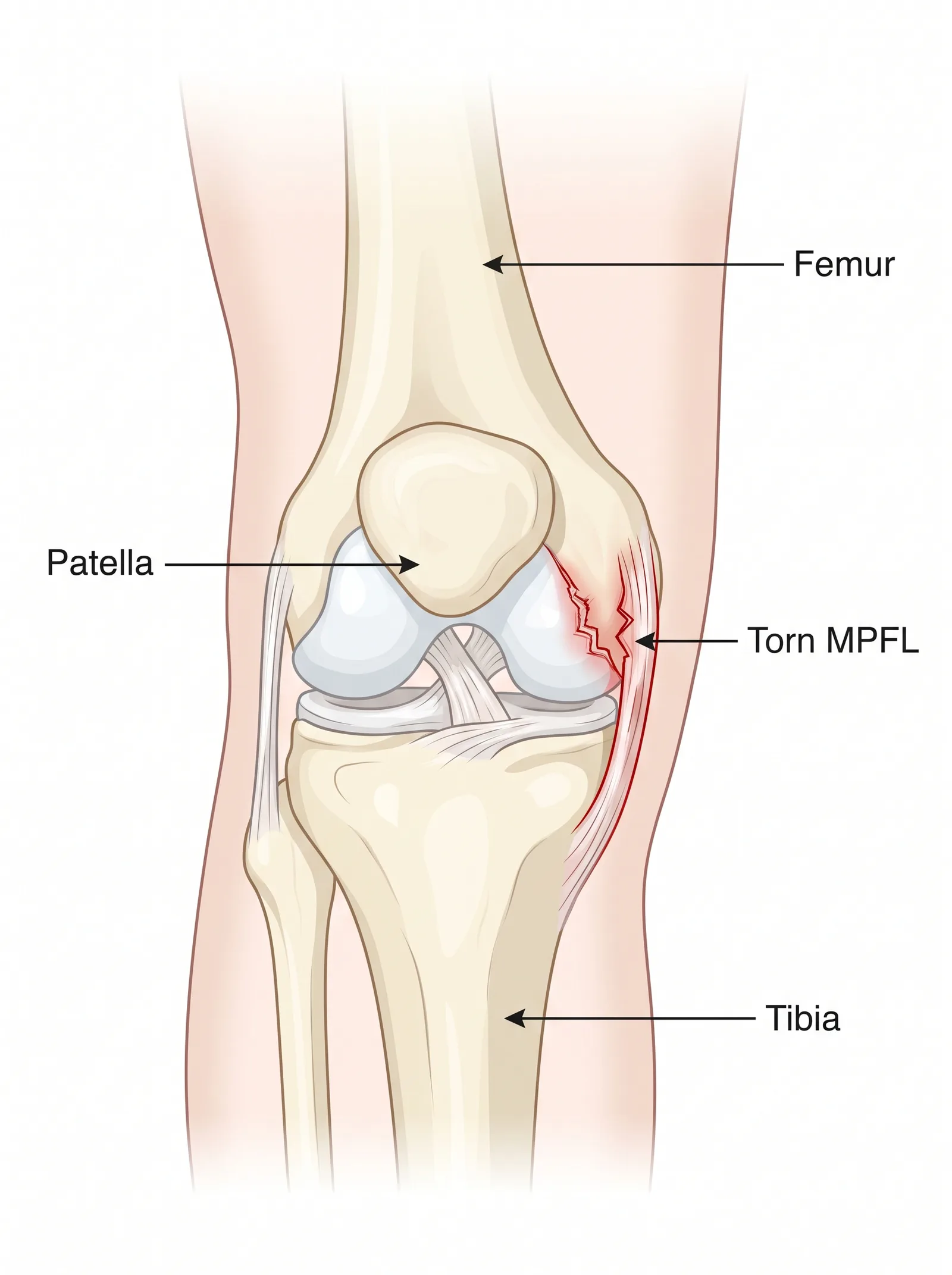
Patellar instability is when the kneecap slips partly or fully out of its groove. It can follow an injury or relate to how the knee is built. Many people improve with guided strengthening and bracing; surgery is considered for repeated dislocations or specific structural causes.
Shariff Bishai diagnoses and treats kneecap (patellar) instability in Troy, from the first visit through recovery.
Who treats kneecap (patellar) instability: a complete guide in Troy?
Shariff Bishai is a board certified orthopedic surgeon who treats kneecap (patellar) instability: a complete guide in Troy, MI. Fellowship trained at Plancher Orthopaedics and Sports Medicine (orthopedic sports medicine fellowship). Dr. Bishai sees patients at the practice in Troy; appointments can be requested through this site.
What is Kneecap (Patellar) Instability?
Patellar instability means the kneecap, the small bone at the front of the knee, moves out of its normal track.
The kneecap sits in a groove on the end of the thigh bone and glides up and down as the knee bends and straightens. When it slips partly out, that is a subluxation. When it comes fully out of the groove, that is a dislocation. After it happens once, the knee can become prone to it happening again, which is what instability describes.
There are two broad stories behind patellar instability. In the first, a specific injury, such as a twist or a direct blow, forces the kneecap out of place, often tearing a soft-tissue restraint on the inner side of the knee. In the second, the knee is built in a way that makes the kneecap more likely to slip: a shallow groove, a kneecap that sits high, loose ligaments, or alignment that pulls the kneecap outward. Often both play a part, with an underlying tendency made worse by an injury.
A first dislocation frequently happens in adolescence or young adulthood, and often the kneecap slips back into place on its own or with gentle help. Understandably, it can be alarming and painful. The good news is that instability is well understood, and there is a clear range of treatments from strengthening to surgery, chosen to fit the cause.
This condition is different from patellofemoral pain, where the front of the knee aches without the kneecap actually leaving its groove. If your kneecap has slipped out or feels like it might, this instability guide is the right match.
This deep guide pairs with the shorter patellar instability service page at the office of Shariff Bishai. Start there for a quick overview, then use this page for depth.
What are the symptoms of Kneecap (Patellar) Instability, and when should you see a specialist?
Patellar instability often feels like the following.
- The kneecap slipping, shifting, or fully popping out of place, then going back in. - A feeling that the knee is about to give way at the front, especially when twisting or changing direction. - Pain at the front or inner side of the knee, particularly after a slip. - Swelling after a dislocation, sometimes significant. - A sense of insecurity or guarding, avoiding certain movements for fear the kneecap will slip. - A visible shift of the kneecap during an episode, sometimes with the knee buckling.
After a full dislocation, there is usually swelling and pain, and the knee may be hard to bend at first. Between episodes, some people feel fine, while others have ongoing apprehension that the kneecap might slip again.
It is reasonable to see a specialist:
- After any episode where the kneecap slipped out of place, even if it went back in. - If the knee feels unstable or you are guarding against certain movements. - If dislocations or near-dislocations keep happening. - If there is swelling, catching, or the knee will not fully move after an episode. - If fear of another slip is limiting your activity.
Seek prompt care if the kneecap is still out of place, if the knee is locked, or if there is significant swelling after an injury, since a dislocation can sometimes chip cartilage or bone that needs evaluation.
How is Kneecap (Patellar) Instability diagnosed, and what does the visit involve?
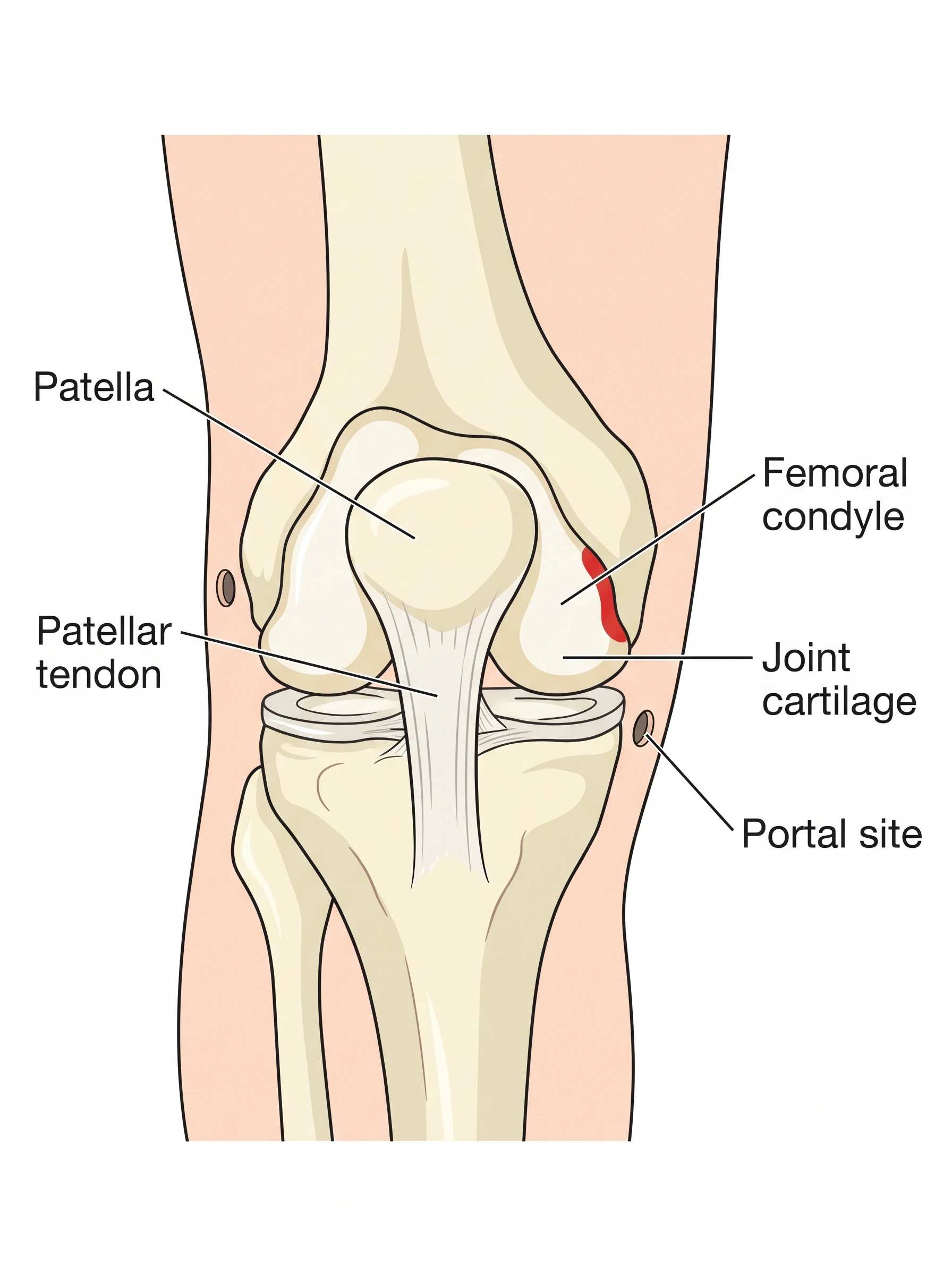
Diagnosing patellar instability combines your history, a physical exam, and imaging, with attention to why the kneecap is slipping.
Your visit typically includes:
- A history. What happened during episodes, how many times the kneecap has slipped, whether it went back on its own, and any family history or prior knee issues. - A physical exam. The specialist checks how the kneecap tracks and how far it can be moved toward the outer side, tests the soft-tissue restraints, and assesses alignment, flexibility, and strength of the hip and thigh. A test of apprehension, where gently pushing the kneecap outward causes a guarding response, is telling. - X-rays. These show the bones, the shape and depth of the groove, how high the kneecap sits, and any small fractures or loose fragments from a dislocation. - MRI. This magnet-based scan shows the soft-tissue restraints, cartilage, and any damage from the kneecap slipping, and helps map the structural factors behind instability.
Understanding the specific cause is central, because treatment differs depending on whether instability comes mainly from an injury or from how the knee is built. The specialist combines the findings to explain why your kneecap is unstable and what that means for the plan.
What is the natural course, and what is the procedure sequence?
The course of patellar instability depends largely on why the kneecap slips.
After a first dislocation from an injury, many people recover well with rehabilitation and do not slip again, especially when they build strong, balanced muscle control. The torn inner restraint often heals enough, and the knee regains security over weeks to months.
For others, particularly those whose knee is built in a way that predisposes to slipping, the kneecap may dislocate again. Each dislocation can add stress to the joint and sometimes damages cartilage, which is one reason repeated instability is taken seriously. Recognizing a structural cause early helps guide treatment before a pattern sets in.
When surgery is chosen, the specific steps depend on the procedure, but a common approach reconstructs the inner soft-tissue restraint that normally holds the kneecap in place. In general sequence, such a procedure involves:
- Anesthesia, given so you feel no pain during surgery, discussed with the anesthesia team beforehand. - Inspection, often with a small camera, to assess the joint and address any loose cartilage fragments. - Preparing a graft, a piece of tendon used to rebuild the torn or stretched inner restraint. - Placing the graft between the kneecap and the thigh bone so it recreates the restraint that keeps the kneecap tracking correctly. - Securing the graft at the right tension so the kneecap sits and glides properly. - Closure of the incisions.
In some cases, additional steps address alignment or the groove. The surgeon selects the procedure that fits the cause of your instability, and rehabilitation afterward is staged to protect the repair.
What is the recovery timeline for Kneecap (Patellar) Instability?
Recovery from patellar instability depends on whether it is treated with rehabilitation or surgery.
The milestones below are based on what you can do, alongside general guidance from the American Academy of Orthopaedic Surgeons. These are ranges, not promises.
Non-surgical recovery after a dislocation. The goal is to reduce swelling, regain full motion, and rebuild the muscle control that keeps the kneecap secure. With guided rehabilitation, many people improve meaningfully over about six to twelve weeks. The milestone is walking and using stairs confidently without a sense the kneecap will slip, followed by a staged return to activity.
After surgery. Recovery is staged to protect the repair. A brace and limits on certain movements are common early. The goal in the first phase is to protect the reconstruction, control swelling, and gradually regain motion. Rebuilding strength and returning to sport or demanding activity is often staged over several months. The milestone is meeting your surgeon's strength, control, and stability targets rather than reaching a set date.
Across both paths, confidence returns gradually as strength builds, and control matters as much as raw strength. Progress is judged by what you can do securely, not the calendar alone, and following the staged plan protects your result.
How should you prepare for Kneecap (Patellar) Instability?
If surgery is chosen, planning ahead helps recovery.
Most procedures involve same-day surgery, though your team will confirm.
Prehabilitation. Before surgery, work to reduce swelling, regain motion, and keep the thigh muscles as strong as possible. A calmer, stronger knee going in supports a smoother recovery.
Home setup. Arrange a comfortable resting spot with room to elevate the leg, clear walkways, and keep daily items within reach. Set up a space for early exercises.
Transportation. Plan for someone to drive you home after anesthesia and to early follow-up visits.
Time off. Discuss time away from work or school based on your job and the procedure. Physical and pivoting activities need more time than desk work.
Support at hand. Have someone available for the first days to help at home, especially while you use crutches and a brace.
Equipment. Have crutches, any prescribed brace, and ice therapy ready before surgery.
Health preparation. Follow instructions on eating, drinking, and medications, and tell the team about all medicines and supplements. The office can answer insurance questions directly.
Which warning signs should you call about?
During recovery, call the office if you notice the following.
- The kneecap slipping out again or a strong sense that it has dislocated. - Increasing redness, warmth, or drainage from an incision, or a fever, which can signal infection. - Swelling or pain that worsens instead of improving. - The knee locking or catching, which can suggest a loose fragment. - Calf pain, swelling, warmth, or tenderness, which should be checked promptly. - Numbness, tingling, or a cold, pale foot. - Pain not controlled by the plan you were given.
For severe symptoms such as a kneecap that stays out of place, sudden chest pain, trouble breathing, or a large, hot, swollen leg, seek prompt or emergency care. For other questions, call the office of Shariff Bishai at (248) 952-8080; the team is glad to help you decide what needs attention.
What results can you expect from Kneecap (Patellar) Instability?
People want to know how instability treatment turns out.
Results vary with the cause, the number of prior dislocations, and rehabilitation, and the figures below are ranges, not promises.
According to general guidance from the American Academy of Orthopaedic Surgeons, many people recover well from a first patellar dislocation with non-surgical care centered on strengthening, and a substantial share do not go on to repeated dislocations.
General guidance from the American Academy of Orthopaedic Surgeons also notes that people with repeated dislocations, or with structural causes such as a torn restraint or a shallow groove, may benefit from surgery aimed at the specific cause, and that these procedures restore stability for the majority, with recovery staged over months.
The overall message is that most people regain a secure, functional knee, whether through rehabilitation or a targeted procedure, and that matching treatment to the cause gives the best chance of lasting stability. The specialist will interpret these general figures in the context of your knee.
What do patients ask most?
My kneecap went back in on its own. Do I still need to be seen?+
Will it keep dislocating?+
Is this the same as my knee just aching in front?+
Which surgery would I need?+
How long until I can return to sport?+
What are the treatment options?
- 01Early care after a dislocationOnce the kneecap is back in place, the goals are to reduce swelling and protect the knee. Rest, ice, elevation, and a brace that supports the kneecap help in the first weeks. Crutches may be used briefly.
- 02Guided rehabilitationThis is the cornerstone of non-surgical treatment. A physical therapist, a clinician who teaches targeted exercises, strengthens the thigh muscles, especially the inner portion that helps hold the kneecap in its track, along with the hip muscles that control alignment. Better strength and control reduce the chance of another slip. The program also restores motion and confidence.
- 03Bracing and tapingA brace or taping can support the kneecap during activity and help some people feel secure as they rebuild strength.
- 04Activity progressionReturn to sport or demanding activity is staged, building control before high-risk pivoting and cutting.
- 05When surgery is consideredSurgery is considered for people who keep dislocating despite good rehabilitation, or when imaging shows a structural cause, such as a torn restraint, a shallow groove, or alignment that keeps pulling the kneecap out. Several procedures exist, each aimed at a specific cause, such as reconstructing the inner restraint or adjusting alignment. The right procedure depends on your particular anatomy, which the specialist explains so the decision is shared.
How do payments work?
Contact the office to confirm insurance participation.
Fellowship trained at Plancher Orthopaedics and Sports Medicine (orthopedic sports medicine fellowship). Sees patients in Troy.
About Dr. Bishai →