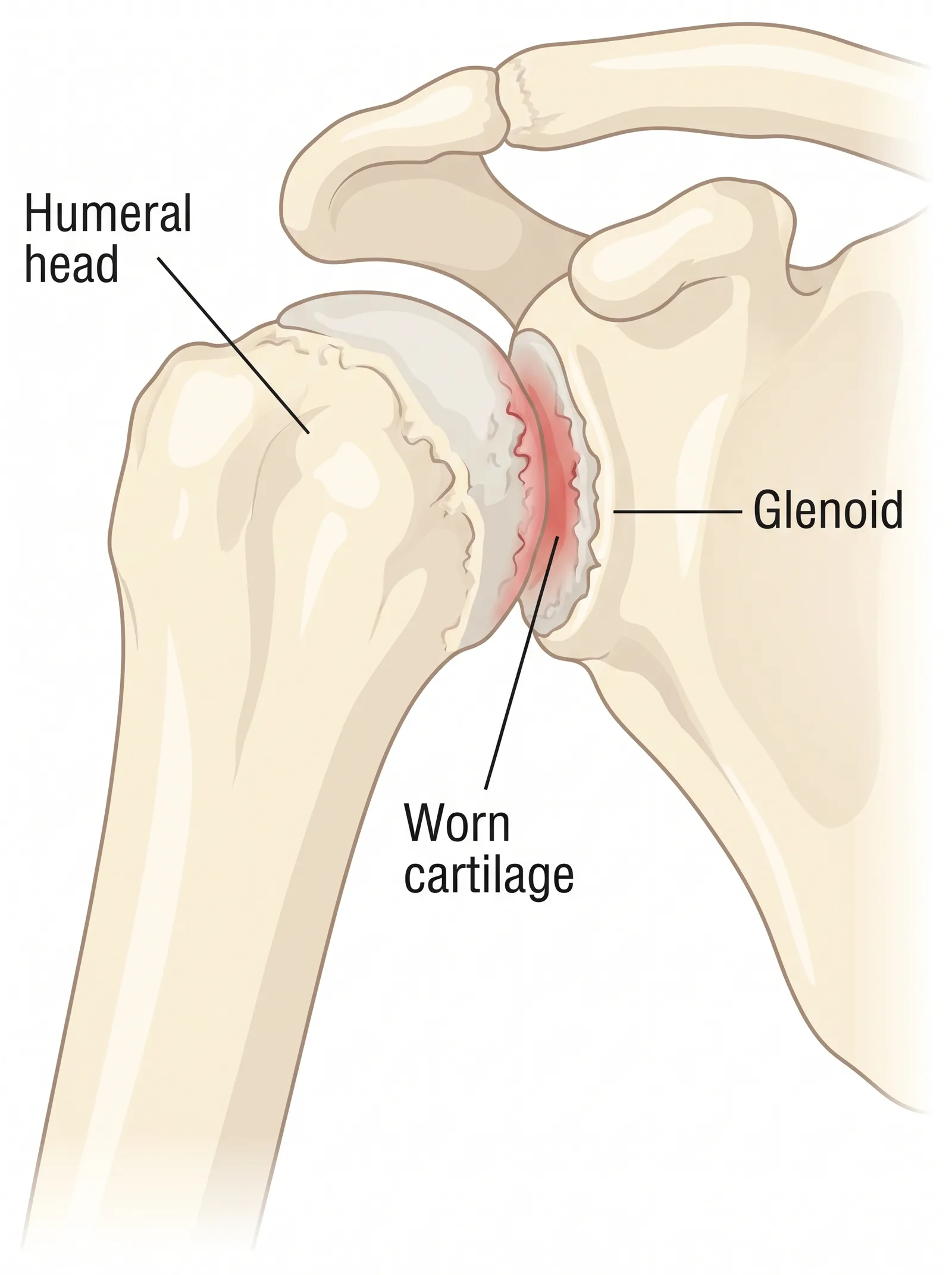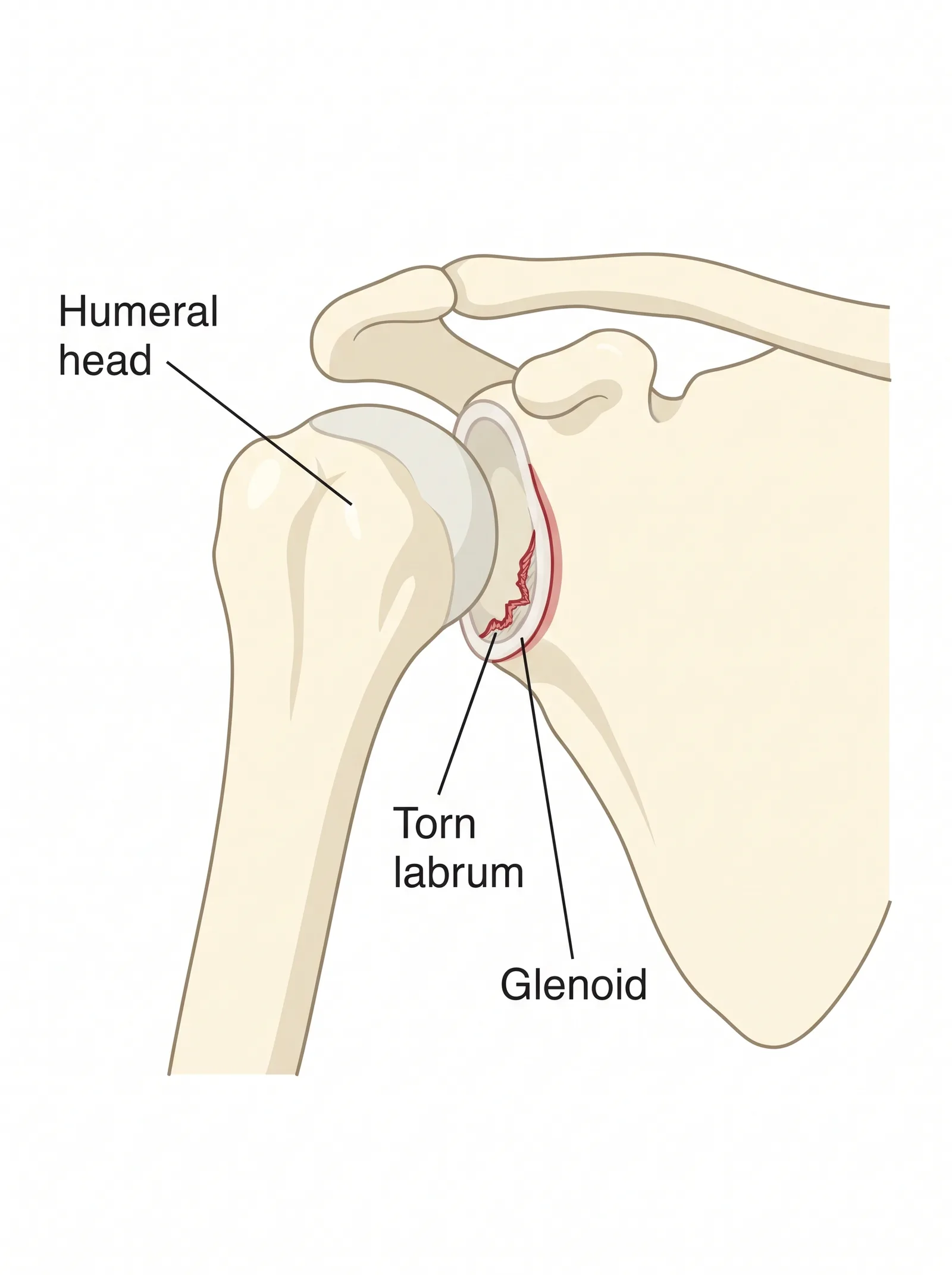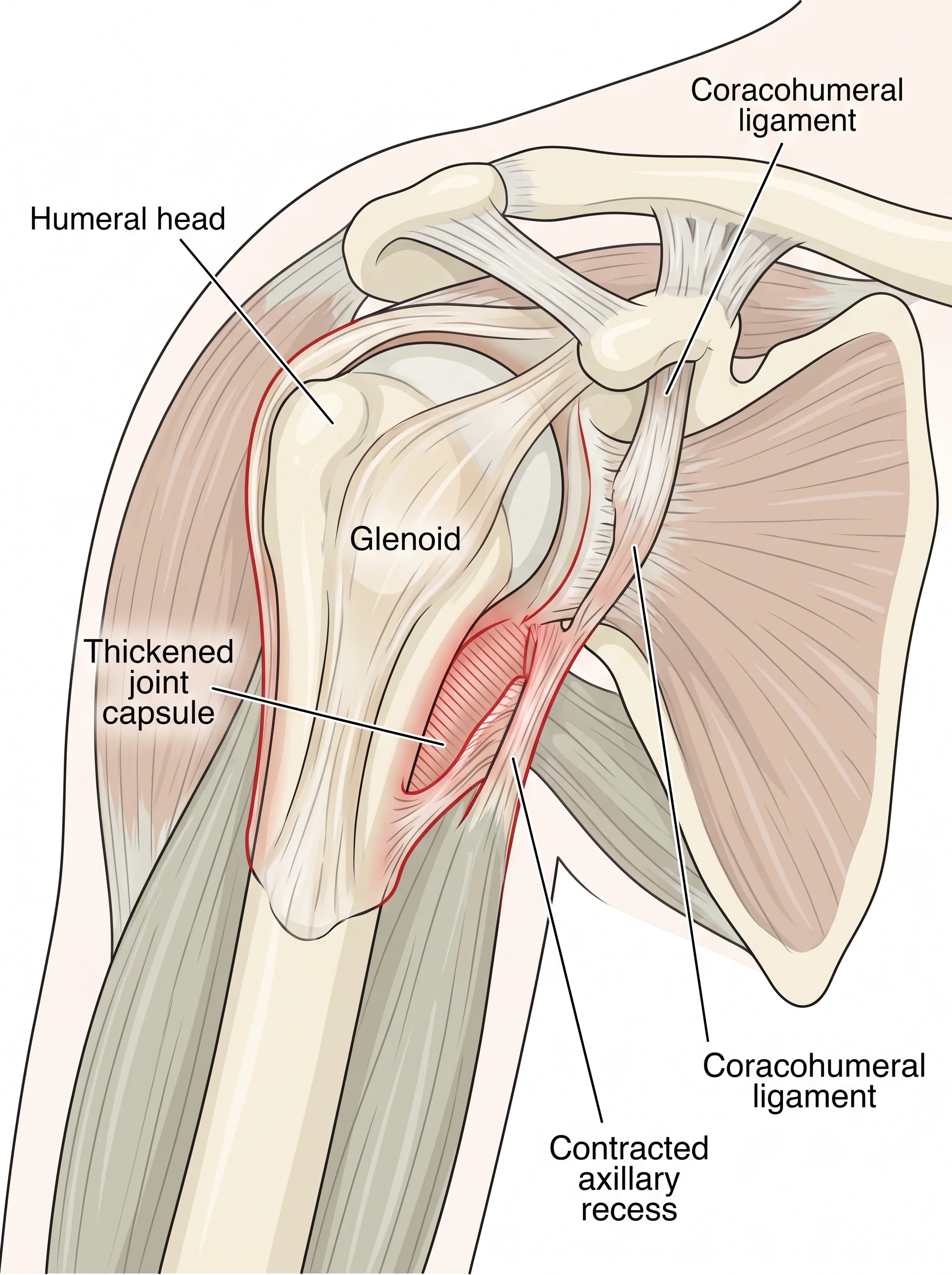
Frozen shoulder is stiffness and pain from thickening and tightening of the tissue around the shoulder joint. Motion slowly decreases, then returns over time. It often improves without surgery. Care focuses on easing pain and restoring motion with therapy and, when needed, other non-surgical steps.
Shariff Bishai diagnoses and treats frozen shoulder in Troy, from the first visit through recovery.
Who treats frozen shoulder: a complete guide in Troy?
Shariff Bishai is a board certified orthopedic surgeon who treats frozen shoulder: a complete guide in Troy, MI. Fellowship trained at Plancher Orthopaedics and Sports Medicine (orthopedic sports medicine fellowship). Dr. Bishai sees patients at the practice in Troy; appointments can be requested through this site.
What is frozen shoulder?
Frozen shoulder, also called adhesive capsulitis, is a condition where the capsule (the sheath of tissue that wraps around the shoulder joint) becomes thick, tight, and inflamed.
As it tightens, the shoulder loses motion in every direction, and moving it hurts. A hallmark of frozen shoulder is that both the movement you do yourself and the movement someone else does for you are limited, because the joint itself has become stiff.
The cause is often unclear. Frozen shoulder can follow a period when the shoulder was kept still, such as after an injury or surgery, and it is more common in people with certain health conditions. It also tends to move through phases: a painful freezing stage, a stiff frozen stage, and a gradual thawing stage where motion returns.
The reassuring point is that frozen shoulder usually gets better with time and non-surgical care, though the process can be slow. Understanding the phases helps set patient expectations, which is worth discussing with a specialist.
What are the symptoms of Frozen Shoulder, and when should you see a specialist?
People with frozen shoulder describe pain and a shoulder that will not move.
Common signs, in plain terms.
- A dull or aching pain, often deep in the shoulder, that may be worse early on. - Stiffness that makes it hard to reach overhead, behind your back, or across your body. - Trouble with everyday tasks like dressing, reaching a seatbelt, or fastening a bra. - Pain that disturbs sleep, especially lying on that side. - A sense that the shoulder is slowly getting tighter over weeks to months.
It is reasonable to see a shoulder specialist when stiffness and pain are limiting daily tasks or sleep, or when motion keeps decreasing. Earlier care can help manage pain and guide safe stretching. This section explains the condition; a specialist confirms whether frozen shoulder, rather than another problem, is causing your symptoms, since stiffness can have several causes.
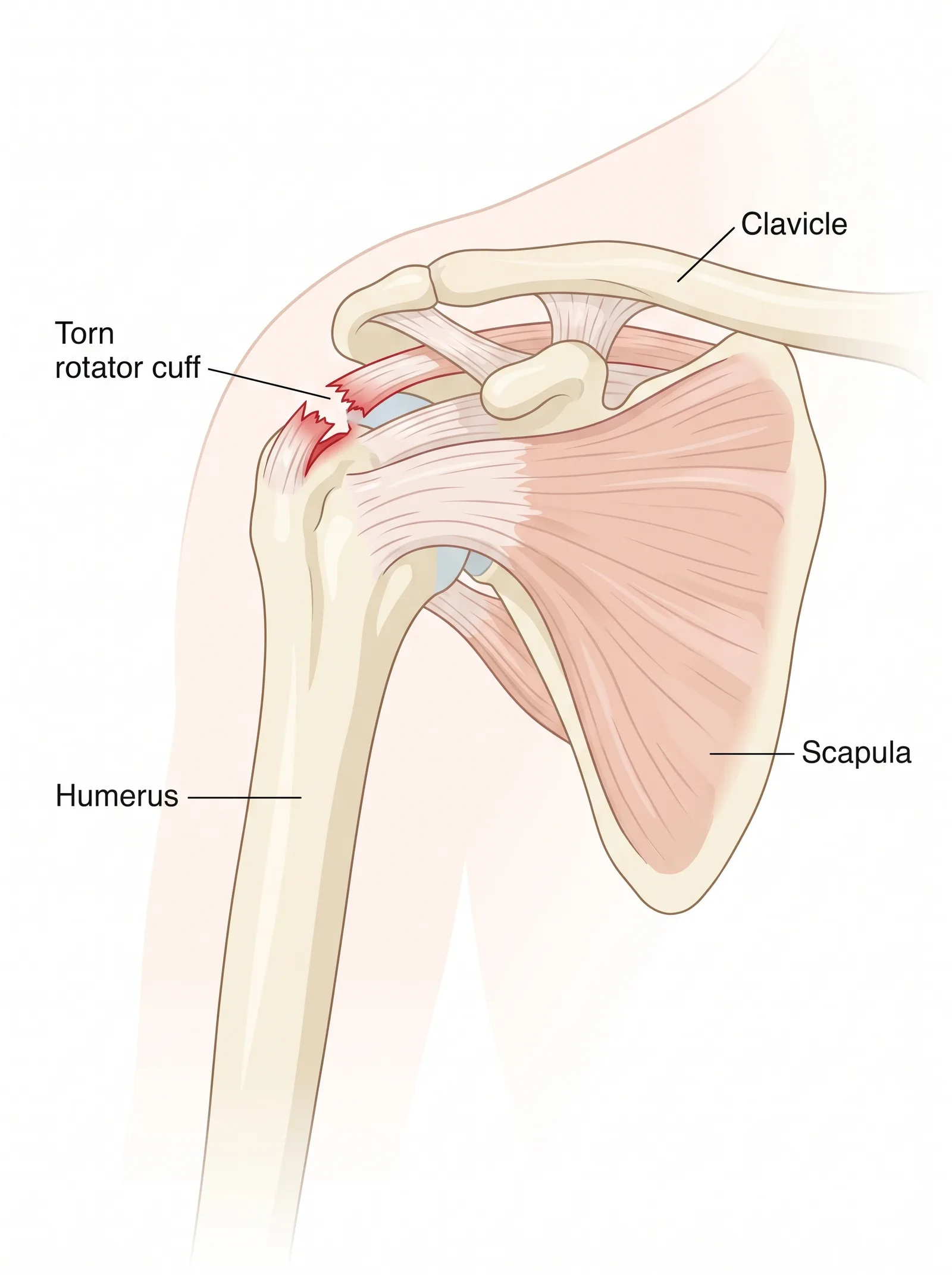
How is frozen shoulder diagnosed?
Diagnosis is based mainly on your history and a physical exam.
The key finding is that the shoulder is stiff both when you move it and when the specialist moves it for you. That pattern helps separate frozen shoulder from problems where only your own movement is limited.
Imaging is used mostly to rule out other causes rather than to confirm frozen shoulder. X-rays check the bones and can help exclude arthritis. Sometimes an MRI (magnetic resonance imaging, a scan that shows soft tissue in detail) is used to look at the surrounding tissues. Your specialist combines the exam and, when needed, imaging to reach the diagnosis and to rule out other conditions.
What is the natural course of Frozen Shoulder?
Frozen shoulder typically moves through three overlapping phases, though the pace differs from person to person.
- Freezing. Pain builds, and the shoulder gradually loses motion. This phase tends to be the most painful. - Frozen. Pain may ease somewhat, but stiffness is at its greatest. Daily tasks are hardest here. - Thawing. Motion slowly returns, and the shoulder gradually loosens.
The whole process can take a long time. According to general guidance from the American Academy of Orthopaedic Surgeons (AAOS), frozen shoulder often improves over a period of months to a few years, and many people recover much of their motion. These are ranges, not promises. Steady, guided stretching supports the thawing phase. Following the condition with your specialist keeps the plan matched to the phase you are in.
How should you prepare for your visit?
For a condition managed mostly without surgery, preparing for the visit helps you get the most from it.
- Track your symptoms. Note when the pain started, how it has changed, and which movements are hardest. - List your health conditions and medicines. Some conditions are linked with frozen shoulder, so this helps your specialist. - Bring your questions. Ask about the phase you are in, what stretching is safe, and what to expect. - Wear easy clothing. Loose, front-opening clothes make the exam easier.
If a procedure is ever recommended, your surgeon will give specific preparation steps at that time, including home setup and arranging a ride.
Which warning signs should you call about?
Frozen shoulder itself is not usually dangerous, but some signs deserve a call.
Contact your specialist's office if you notice the following.
- Pain that suddenly becomes severe or very different from your usual pain. - New numbness, tingling, or weakness in the arm or hand. - Fever with shoulder pain, or a shoulder that is red, hot, and swollen. - If you have had a procedure: spreading redness, drainage, fever, or a hand that looks pale or feels cold.
When in doubt, call the office.
What results can you expect from Frozen Shoulder?
Most people with frozen shoulder recover much of their shoulder motion and comfort over time, often without surgery, though the process can be slow.
According to general guidance from the American Academy of Orthopaedic Surgeons (AAOS), the condition tends to improve over months to a few years, and a majority of people regain good use of the shoulder. These are general findings and ranges, not promises for any one person. Your specialist can explain what to expect based on your phase and health.
What do patients ask most?
How long does frozen shoulder last?+
Will pushing through the pain make it thaw faster?+
Do I need surgery for frozen shoulder?+
Can it come back or happen in the other shoulder?+
What are the treatment options?
- 01Pain control and gentle motion earlyIn the painful early phase, the focus is on easing pain and keeping whatever comfortable motion you have, rather than forcing the shoulder.
- 02Physical therapy and stretchingA guided stretching program to restore motion is the core of treatment, added carefully as pain allows. Doing it consistently matters more than doing it hard.
- 03Anti-inflammatory medicineOver-the-counter medicine can help with pain. Use as directed and check with your specialist about other conditions.
- 04Cortisone injectionA shot of anti-inflammatory medicine into the joint can lower pain, especially in the painful phase, and can make stretching more tolerable.
- 05Managing related health conditionsBecause frozen shoulder is linked with some medical conditions, keeping those well managed supports recovery.
How do payments work?
Contact the office to confirm insurance participation.
Fellowship trained at Plancher Orthopaedics and Sports Medicine (orthopedic sports medicine fellowship). Sees patients in Troy.
About Dr. Bishai →